


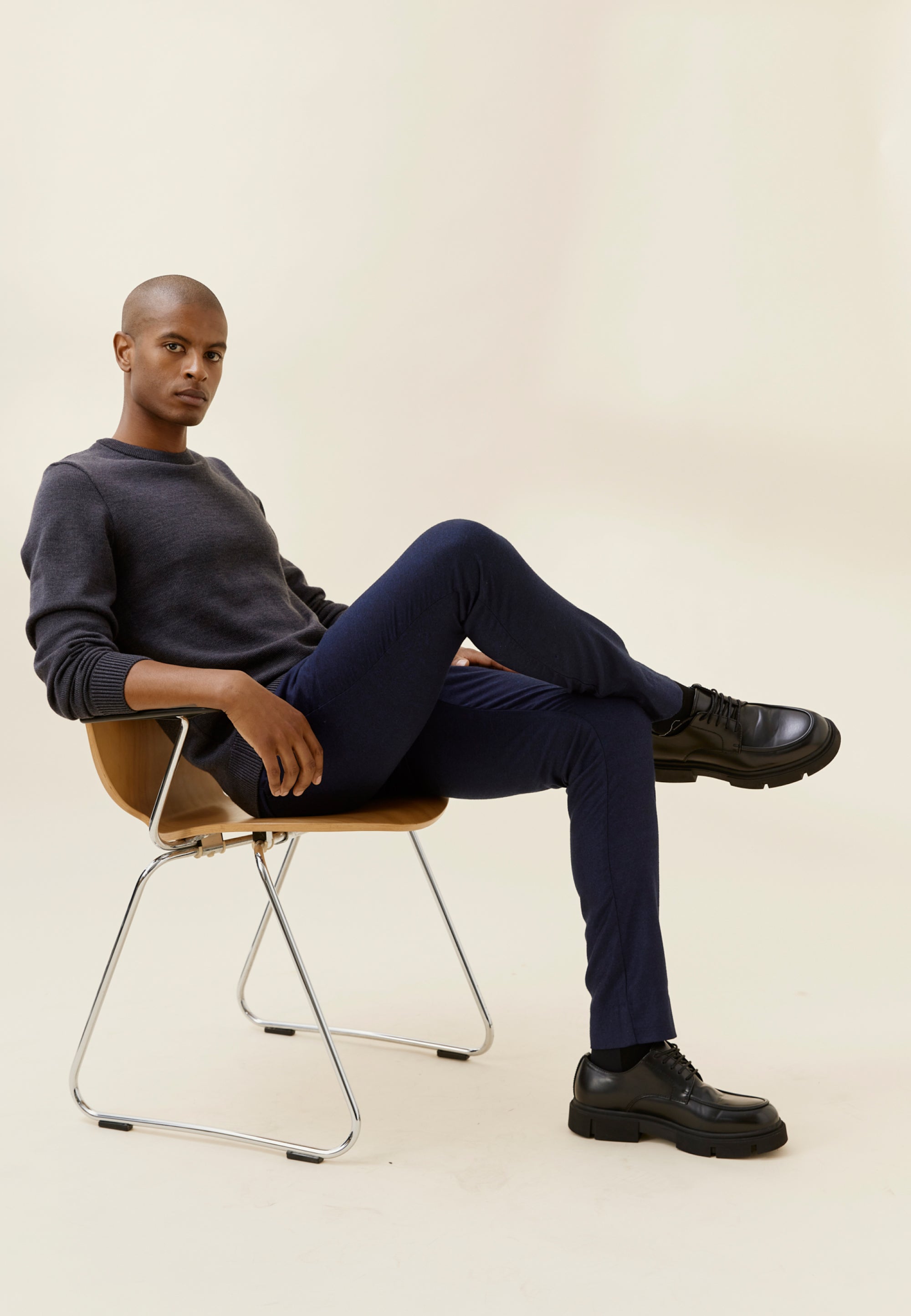
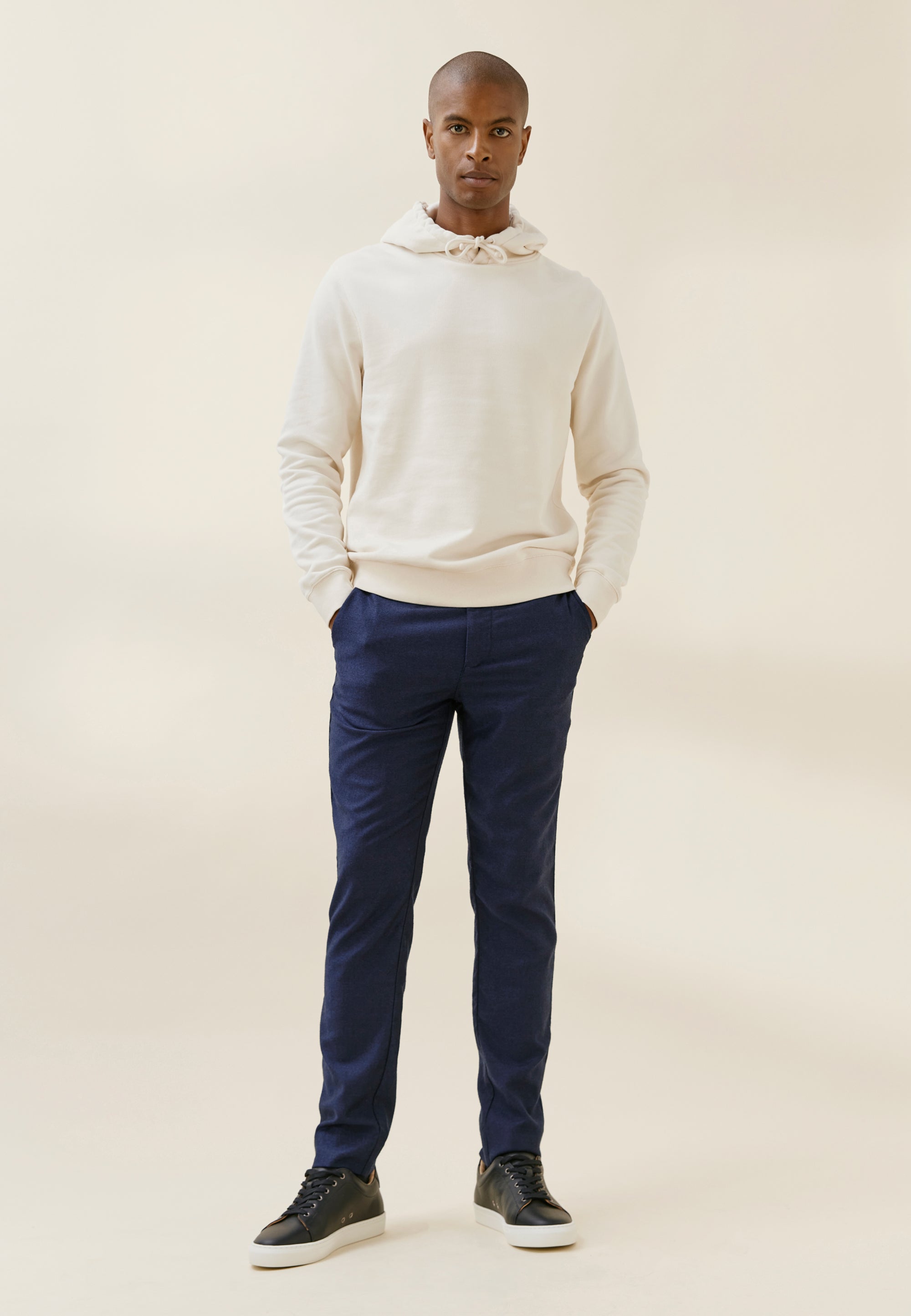
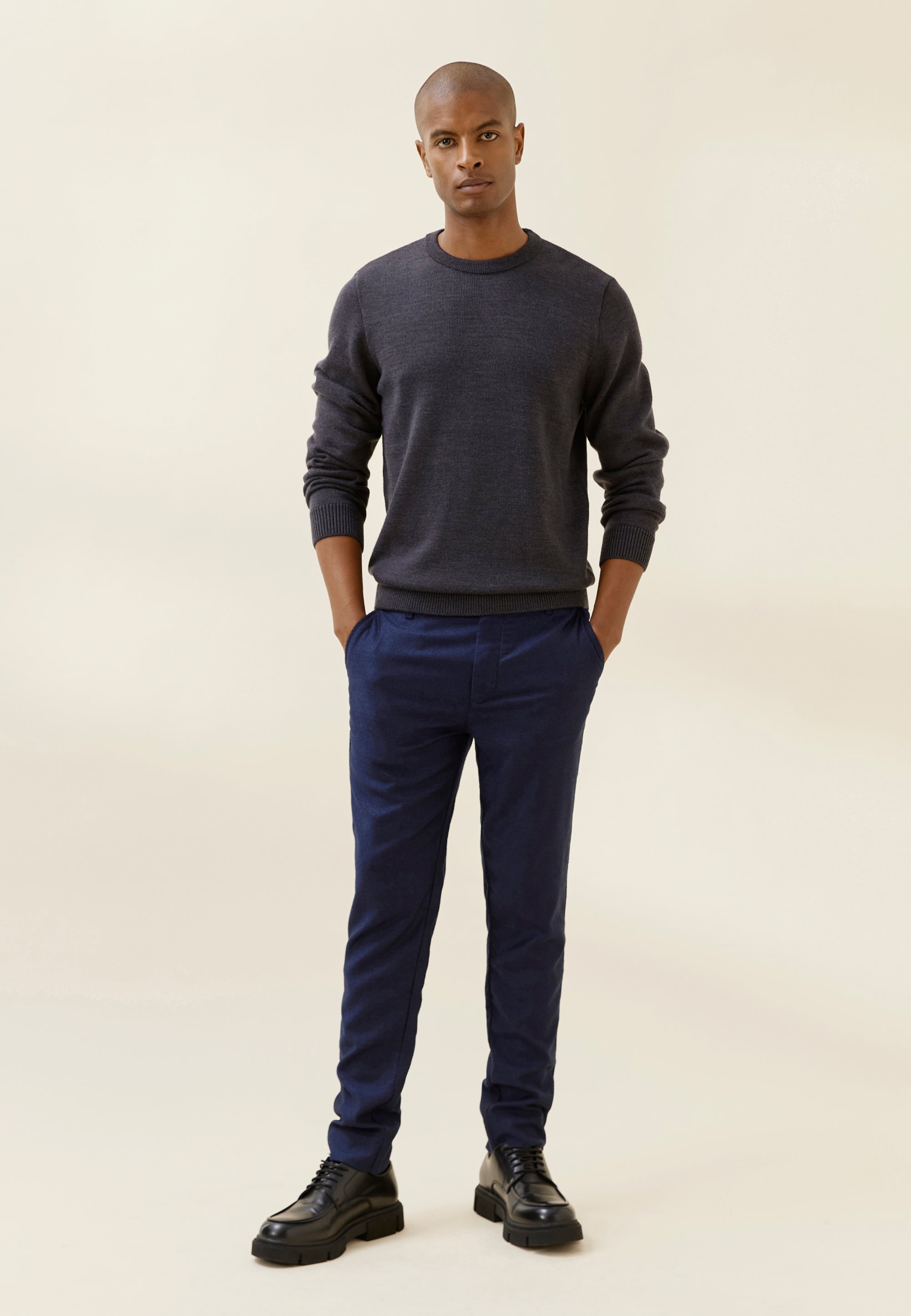
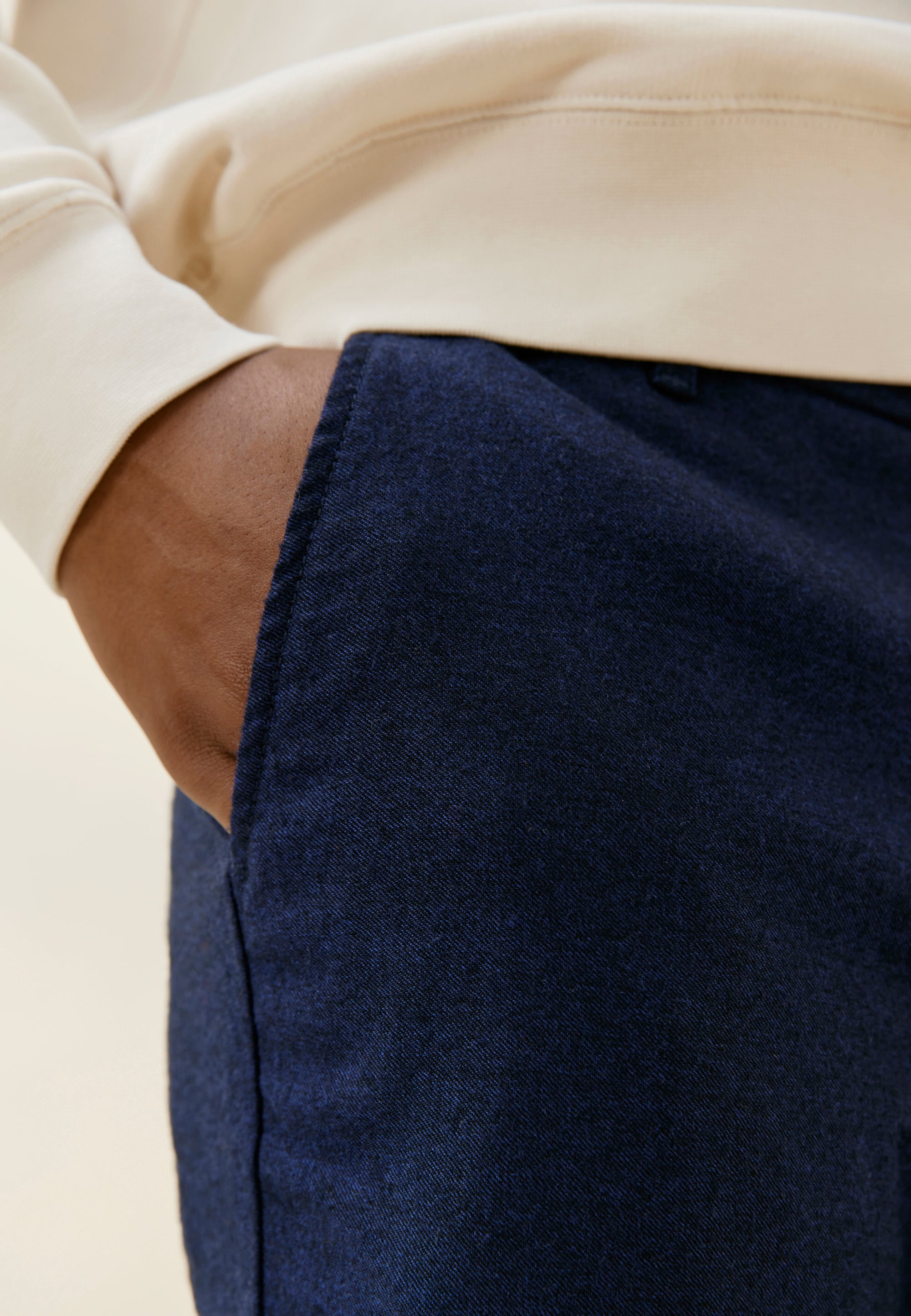
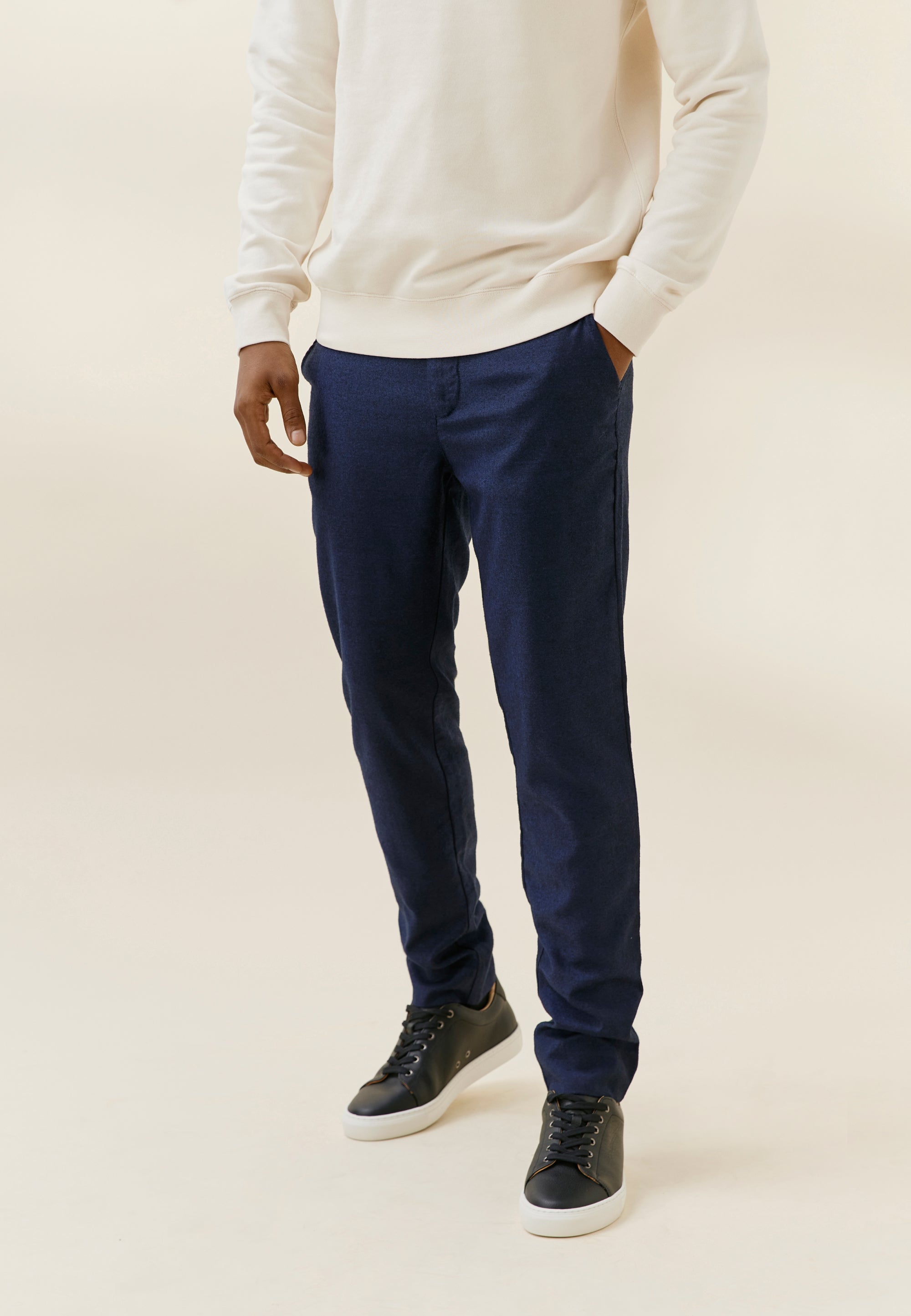
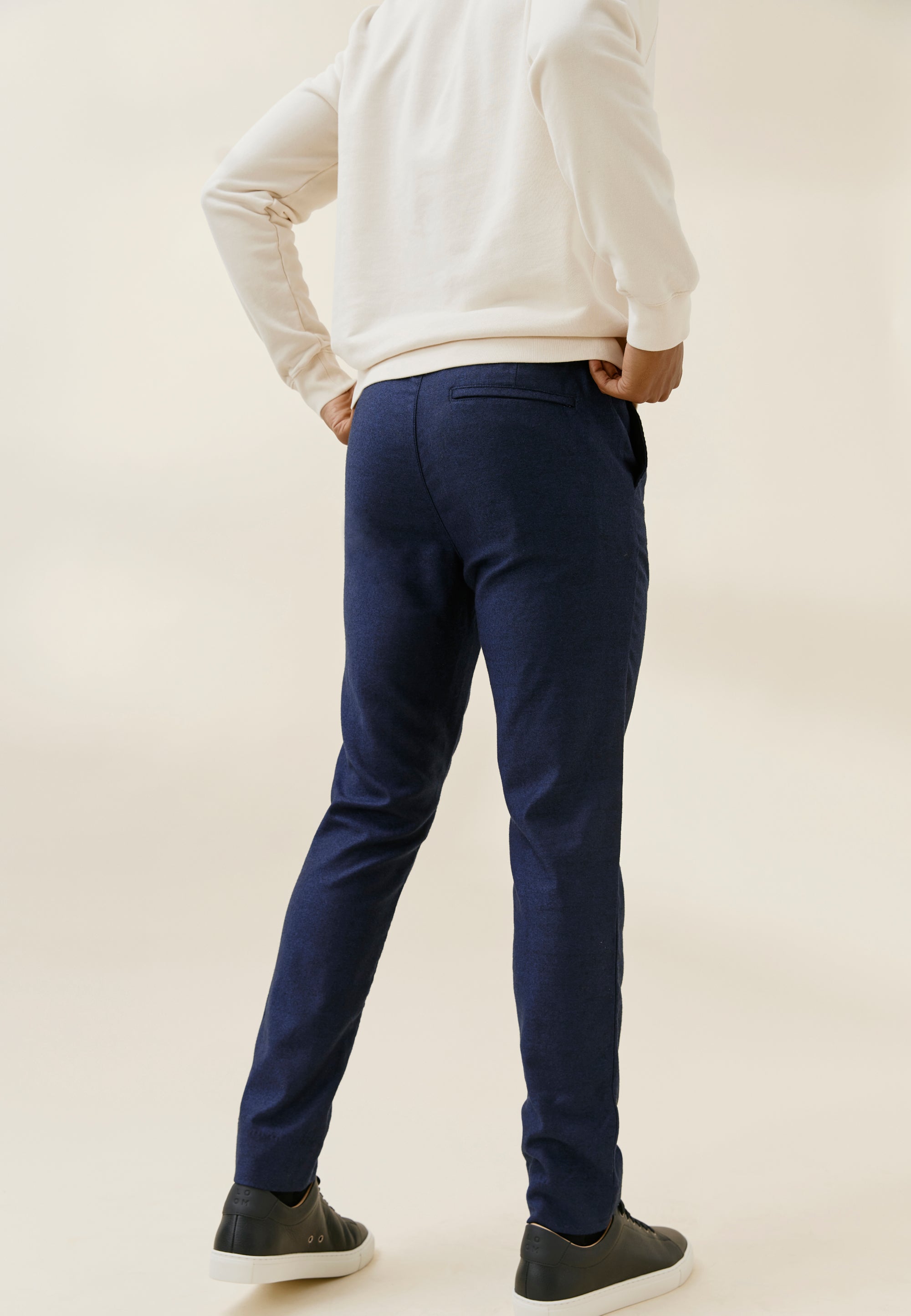


Flannel Pants (Old-School Style)
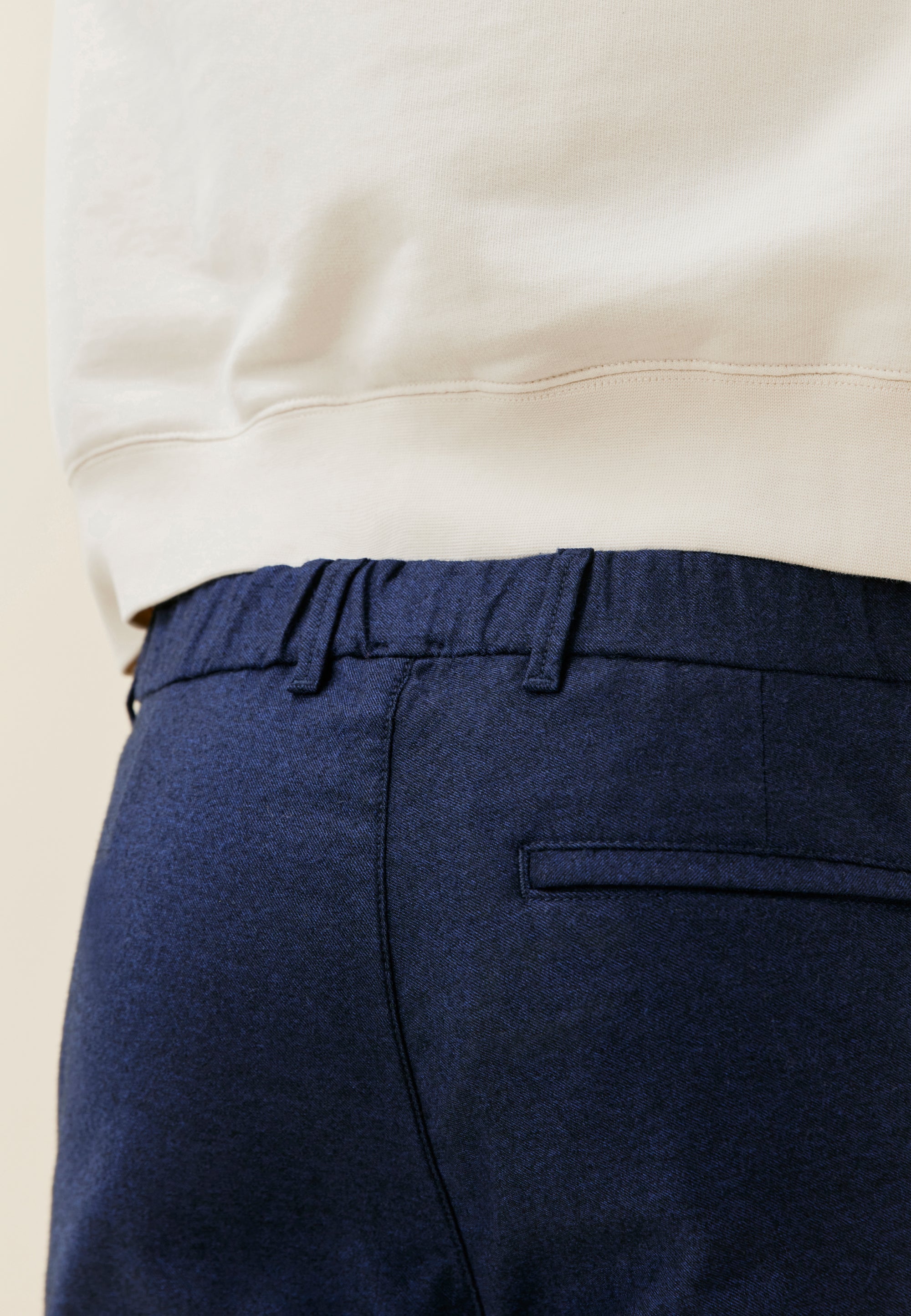
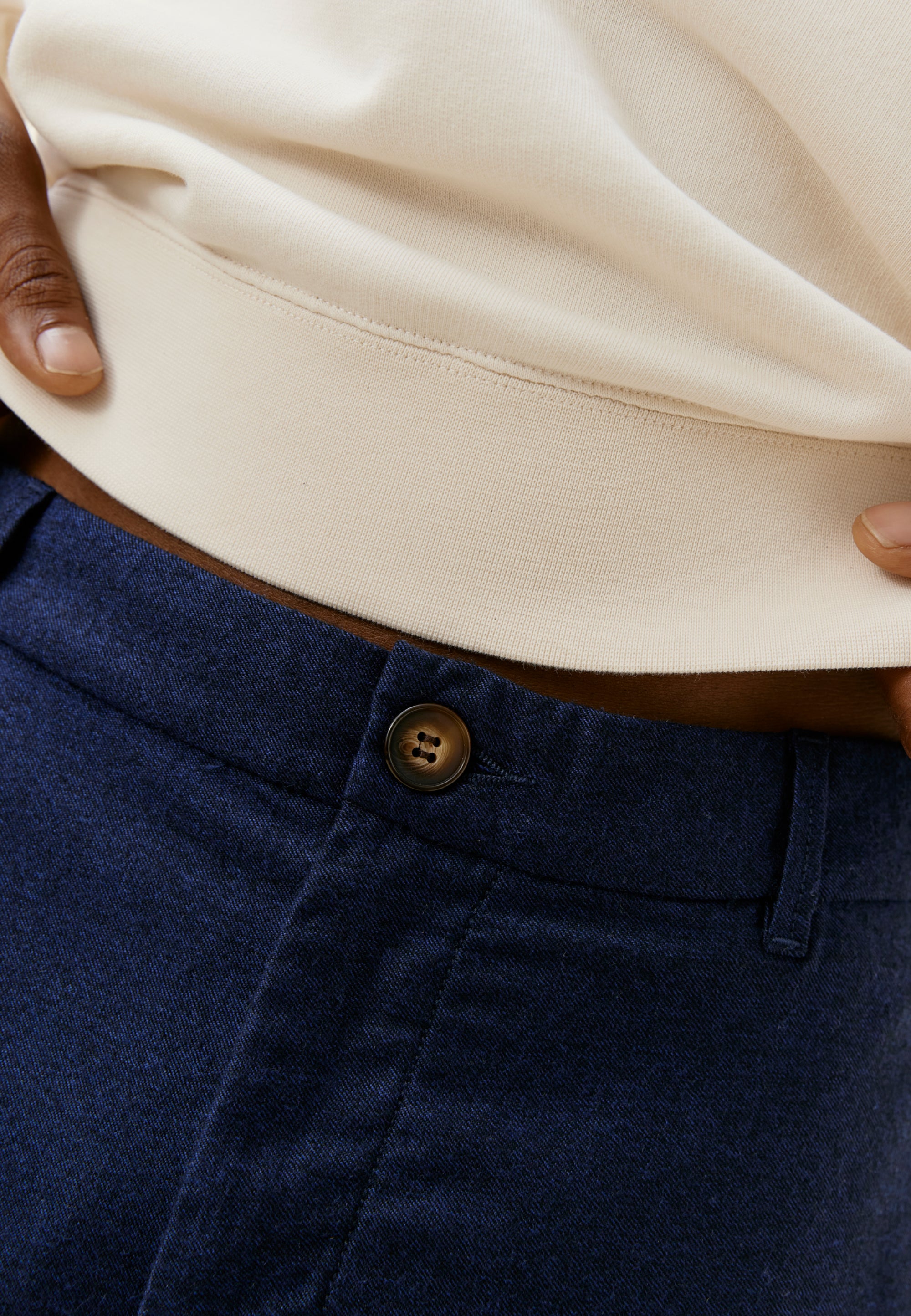
€145 for a pair of pants might seem expensive. But it’s hard to keep the price any lower: wool flannels are very expensive fabrics, especially since we chose a combed, machine-washable wool. Furthermore, these pants require a time-consuming and meticulous manufacturing process (elastic waistband in the back, button-and-hook closure, zippered back pocket, etc.) carried out in Portugal (which is more expensive than in Eastern Europe, Turkey, or the Maghreb, but ensures better working conditions).
Released in
The difference from the previous generation (which sold for €135) is that on this one, the fabric is a little thinner and the fit is a little more form-fitting.
Wool flannel is all the rage among luxury brands. No wonder: these fabrics are ultra-soft and naturally breathable, they drape impeccably, and the colors are rich and deep. These pants are also comfortable thanks to their elastic waistband in the back and the natural stretch of the wool (who said you have to suffer to look good?). Wear them with dress shoes for days when you need to look sharp, or with sneakers for a more casual look.
Composition
100% wool
Origin and Certifications
- Wool: Research in progress
- Spinning, dyeing, weaving: Italy
- Manufactured in Portugal
...manufacture in Portugal instead of France? Of course, producing in Portugal allows us to sell at lower prices. But it’s also easier to produce high-quality goods there: in the 1980s, when France outsourced its manufacturing, Portugal strengthened its own. Still, others besides us manage to make very good wool pants made in France, like Belleville.
... not wool from French sheep? Unfortunately, the wool processing industry has all but disappeared in France, largely due to competition from countries in the Southern Hemisphere... Today, it’s very difficult for us to find French yarns on the market that meet our standards for price and quality, but some brands, such as Laines Paysannes and Ardelaine, manage to create beautiful pieces using French wool.
How This Product Will Age
How do we know this? We ask our customers for their feedback on the product one year after purchase. And if the product is less than a year old, we provide our predictions based on some unsolicited feedback and our experience with similar products.
These pants should age very well and avoid two common problems with pants that wear out: no fading (wool retains its color very well) and no loss of shape (wool naturally returns to its original shape after being stretched).
The only downside to wool is that it’s less resistant to abrasion than cotton: these aren’t the pants to wear every day if you bike to work or often crawl on gravel (even though we’ve chosen so-called “combed” wool, from which the shorter fibers have been removed, resulting in twice the abrasion resistance of conventional wools—18,000 cycles vs. 10,000 cycles in our lab tests).
On the other hand (and this isn’t intuitive), since the fabric is very soft, it’s less likely to develop holes in the crotch than your thick, rough jeans—more explanation on the why and how here.
Care Instructions
If you think they’re too long, you can hem them; if you think they’re too short, you can unpick the hem that’s been folded inward.
The advantage of wool is that its natural elasticity prevents it from stretching out over time. However, if you find that the pants have stretched out a bit over time, simply iron them with steam to restore them to their original shape.
The downside of wool is that it’s less resistant to abrasion than cotton: that means these aren’t the pants to wear every day if you bike to work or often crawl on gravel. But here’s the good news: holes can be mended. If you see holes starting to appear, take them right away to your local tailor—since the color is heathered, the repair will be very discreet.
Letting these pants air out overnight will get rid of just about all odors. And if you really want to, you can machine wash them (use the wool or delicate cycle—no need to take any chances). Do not tumble dry, but ironing is recommended—on the reverse side and not too hot to avoid leaving marks.
Reviews of this product
The standard practice is to send review request emails a few days after the purchase. We wait a month—the minimum amount of time needed to form an informed opinion.
Customer Review Policy
When do you ask customers for reviews?
We’ll send you a review request one month after we receive your order. We believe this is the minimum amount of time needed to have worn and washed an item several times and to form a truly informed opinion. After that, all your reviews are published within a week, whether they’re positive or negative.
Do you request reviews for 100% of the products ordered by customers?
We used to do that at first, but then we realized we were starting to send way too many emails to certain customers who shop with us regularly. In short, we were spamming them a bit. Plus, it was starting to take the team way too much time to respond to reviews—since we want to reply individually and privately to almost everyone who leaves us a review. Today, we no longer ask for reviews on products that meet the following two criteria: 1/ There are enough reviews posted on the site for potential buyers to form an informed opinion about the product. 2/ We on the Loom team have read enough reviews to understand how to evolve the product into the next generation.
Just a quick thought: What proof is there that we aren't manipulating reviews by giving 5-star ratings to everything?
Honestly: nothing—we’re just giving you our word. Just like with everything else, actually: where we manufacture our products, where our wool comes from, our lab test results, and so on. The only times we might edit what you write is if your message contains spelling mistakes (and even then, quite a few slip past us) or if it’s racist, homophobic, etc. (but that’s never happened so far).
Asking for feedback after just one month isn't enough to know if the clothes are really durable, is it?
You're right—that's why we send you another email asking for a review one year after your purchase—we even ask for a photo to see how your garment has aged. We use the responses to improve our clothing and to provide information on “how this product will age” on our product pages. To avoid unnecessarily bothering our customers, we don’t ask for reviews on 100% of the products ordered: as soon as we have enough data to understand where we can improve, we stop asking for reviews after one year.