




The cotton sweater
Released in October 2024
We use organic cotton because so-called "conventional" cotton is a disaster for insects, birds and farmers. More info in this article.
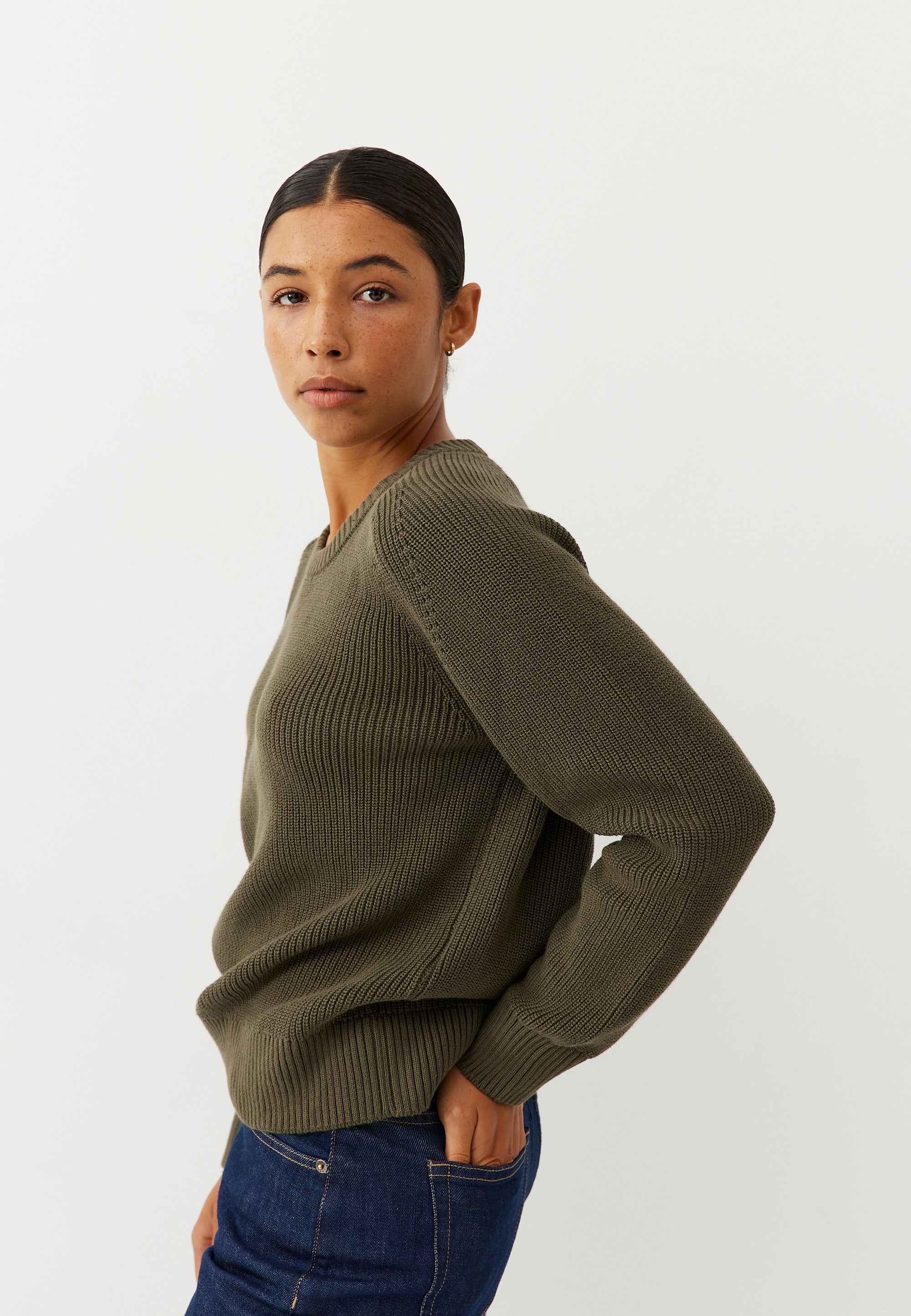
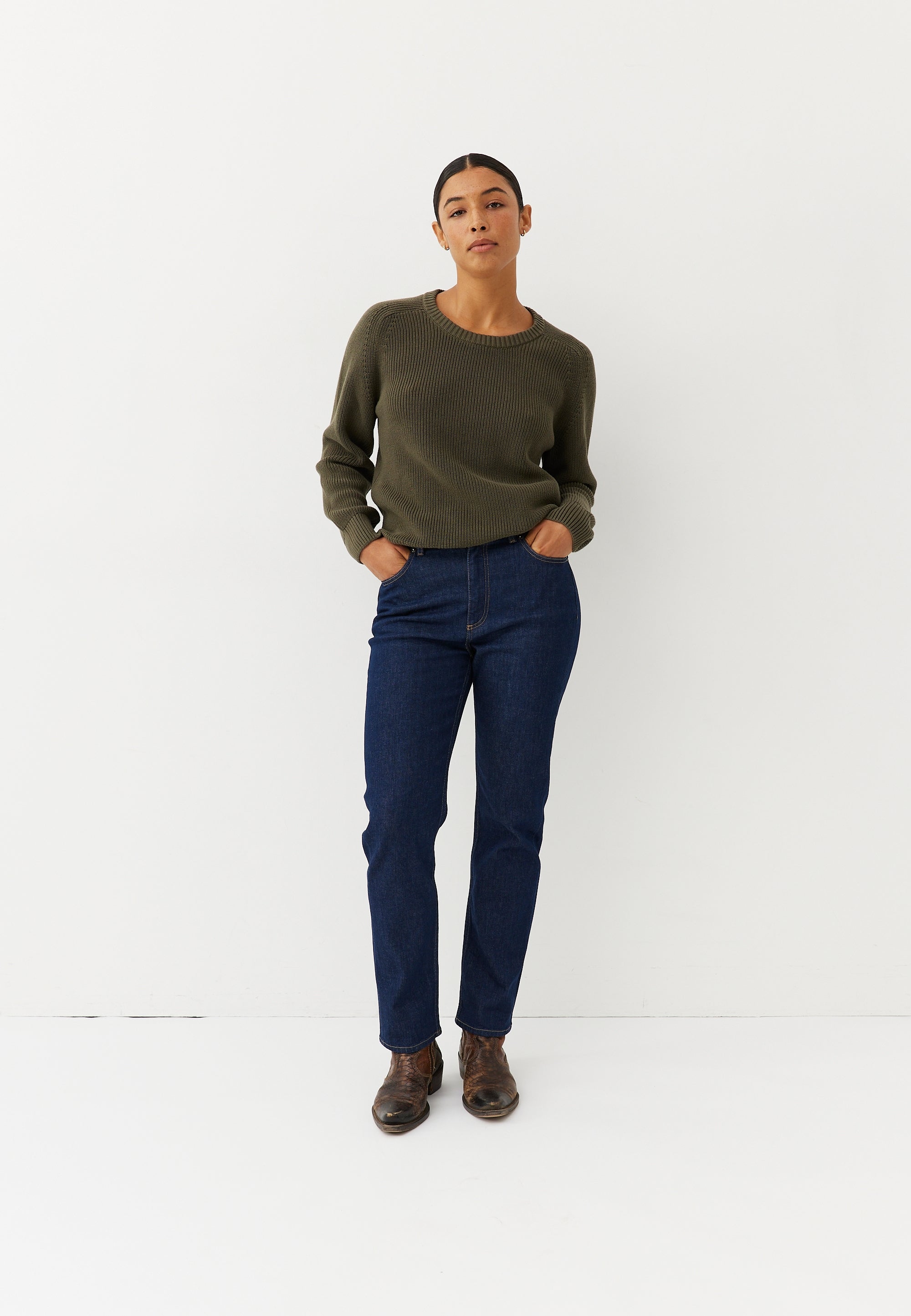
A cotton sweater that's on the thicker side but doesn't get too warm (since it's not wool).
Nice sweaters are often made of wool – they keep you warm but can be delicate: snags, moths, pilling or a washing machine that shrinks them by three sizes, there's no shortage of risks. By choosing to knit it from a cotton yarn, we've made a product that's just as good-looking but more hard-wearing.
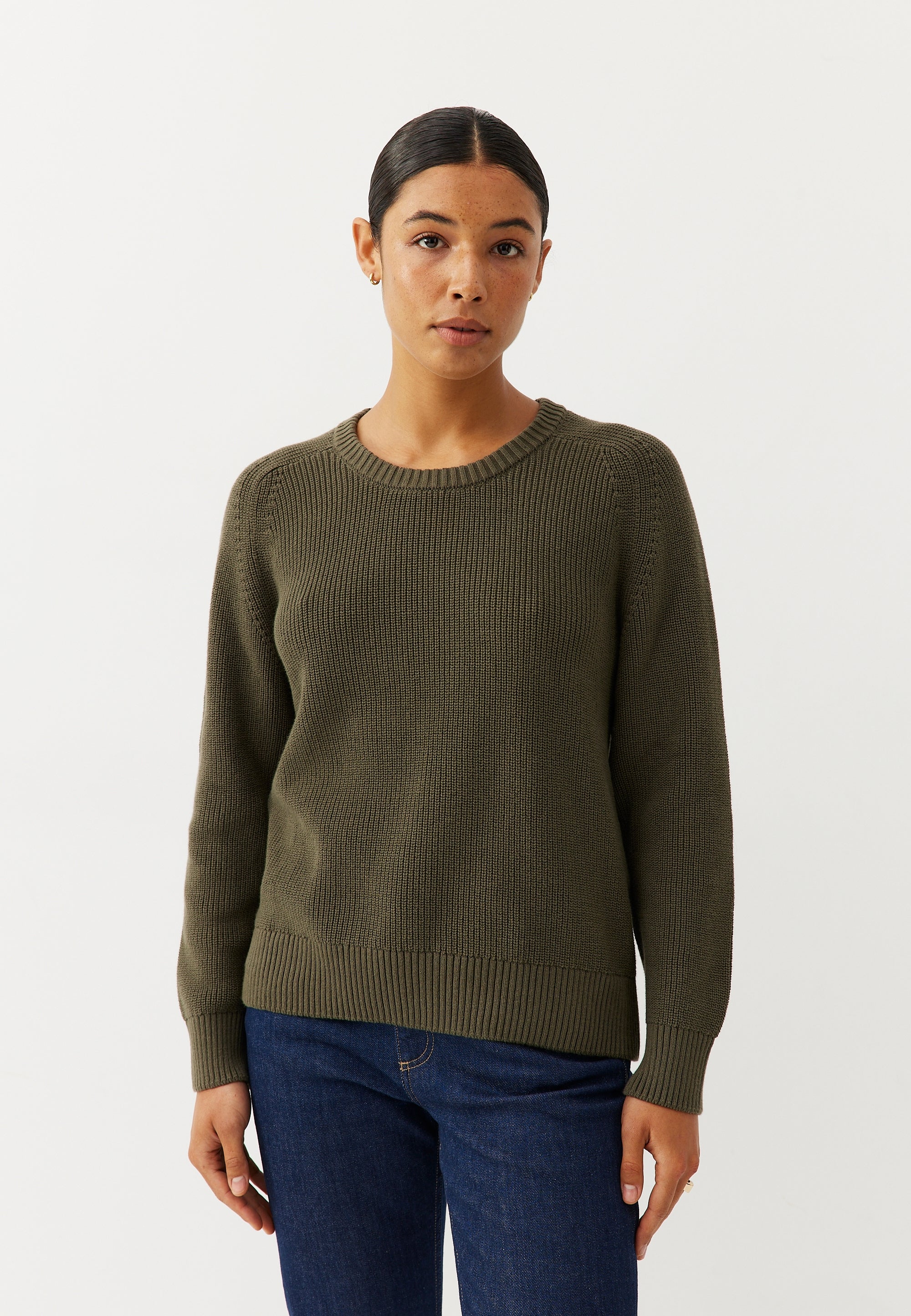
Slightly oversized, tapered at the hem and cuffs with ribbing.
This sweater is made in Portugal, at the Elmate factory we've been working with since 2018.
The techniques behind the quality
 Two-ply yarn
The yarns are twisted together (like a cable) before being knitted, for greater durability.
 Two-ply yarn
 Knitted as tightly as possible
 Elastane reinforcement
 Pre-washed
 Knitted as tightly as possible
The stitch is knitted as tightly as possible, which helps limit pilling and gives the sweater more structure.
Two-ply yarn
Knitted as tightly as possible
Elastane reinforcement
Pre-washed
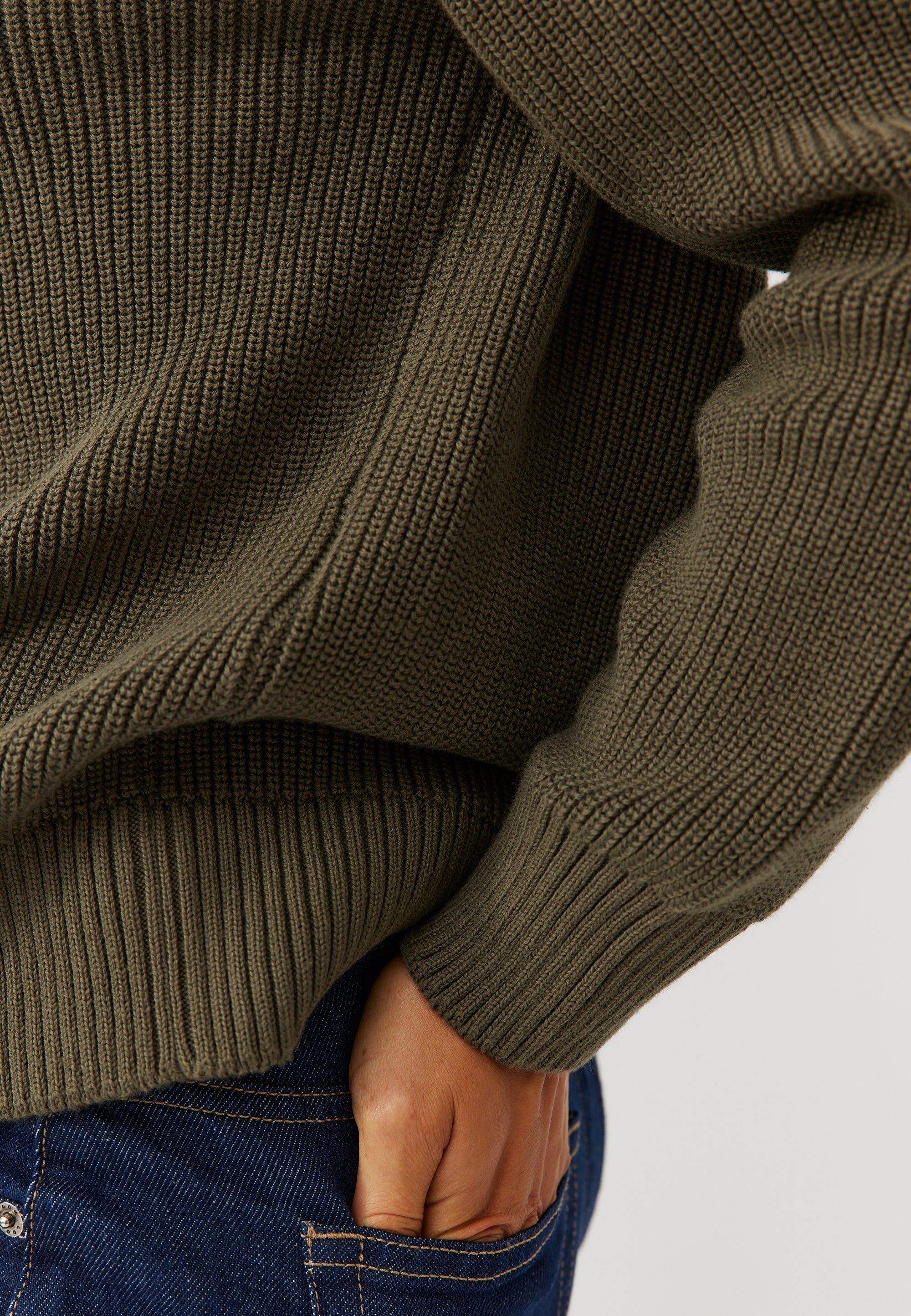
 Elastane reinforcement
Since cotton stretches more than wool, we've woven 4 elastane threads into the cuffs to keep them from losing their shape over time
Two-ply yarn
Knitted as tightly as possible
Elastane reinforcement
Pre-washed
 Pre-washed
This sweater is stabilised and pre-washed at the factory, so it won't shrink on you at home (with cotton garments, most of the shrinkage happens during the first wash).
Two-ply yarn
Knitted as tightly as possible
Elastane reinforcement
Pre-washed
A treat for the eyes


A great cotton sweater, perfect for those in-between seasons. And this one, we think it really stands out with its seed stitch knit, its “semi-hammer” sleeves that emphasise the shoulder line, and its modern, slightly oversized cut.
In detail

Moss stitch
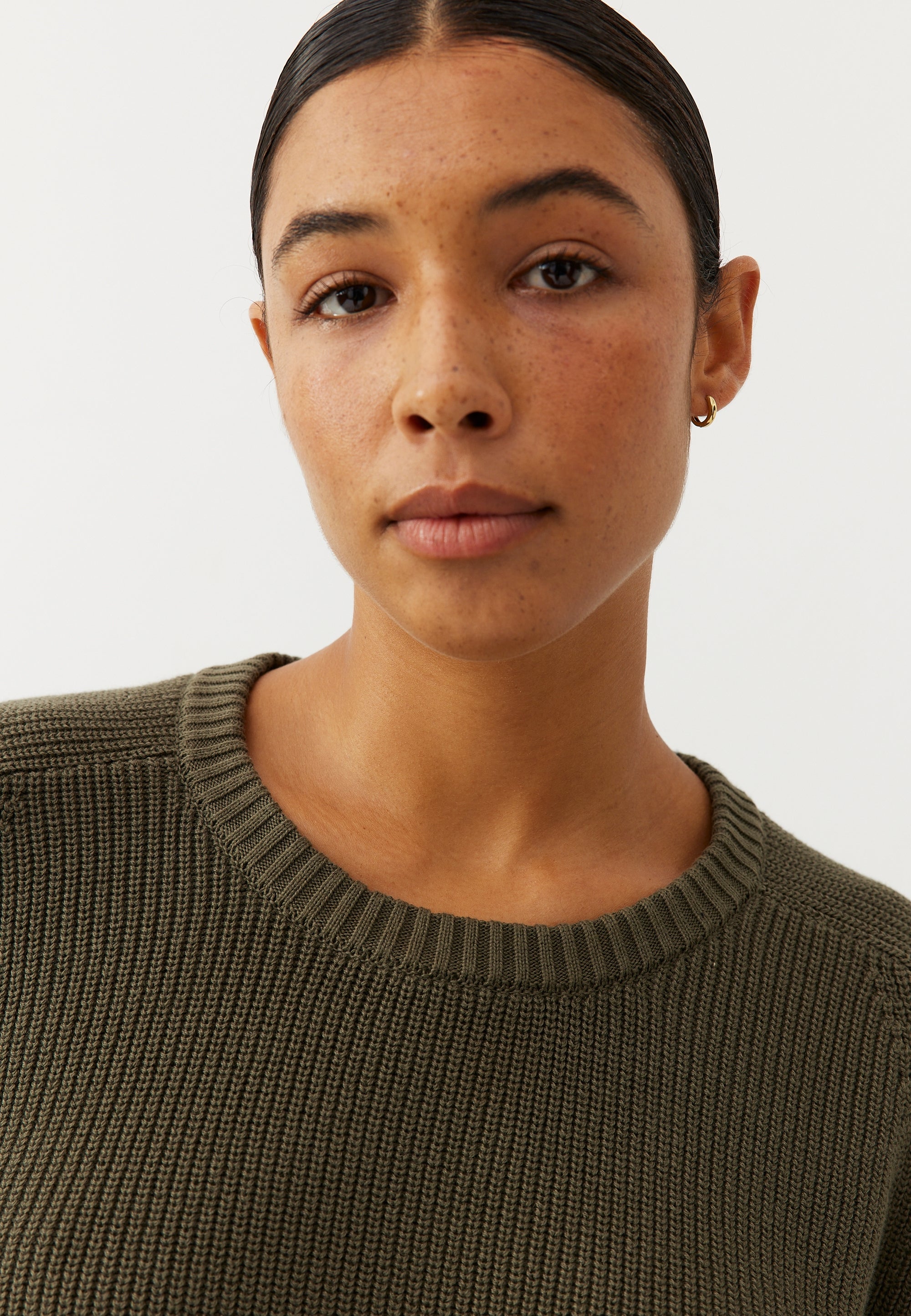
A knit stitch that's naturally stretchy and gives the fabric some texture.

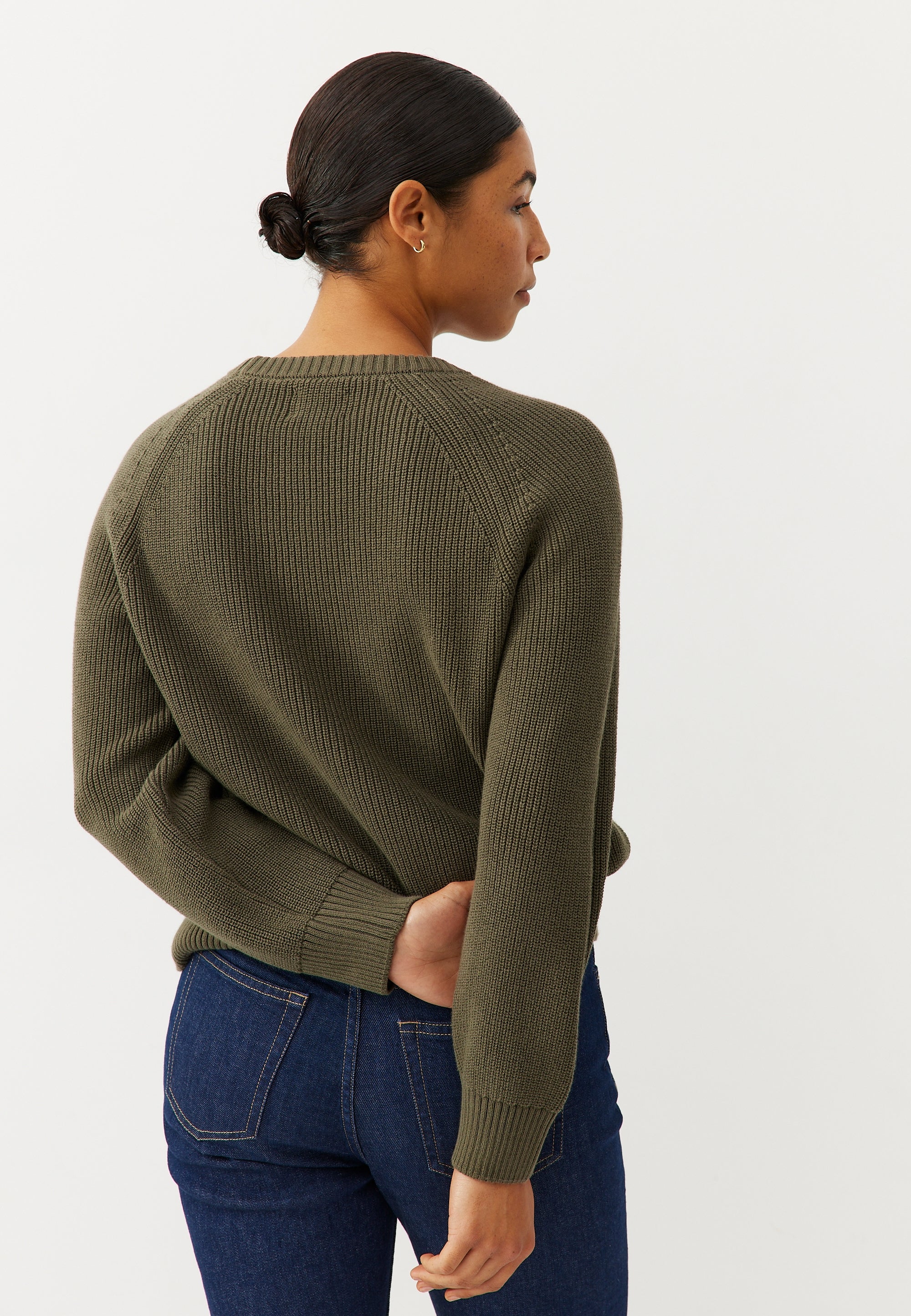
Saddle-shoulder armholes
That trace a nice shoulder line.

Ribbed cuffs
Rib knit 1/1 (one knit stitch, one purl stitch) to tighten the collar and the cuffs.

Fully-fashioned knitting
The panels (back, front, sleeves and collar) are knitted directly to the right shape: it fits better and avoids wasting material.
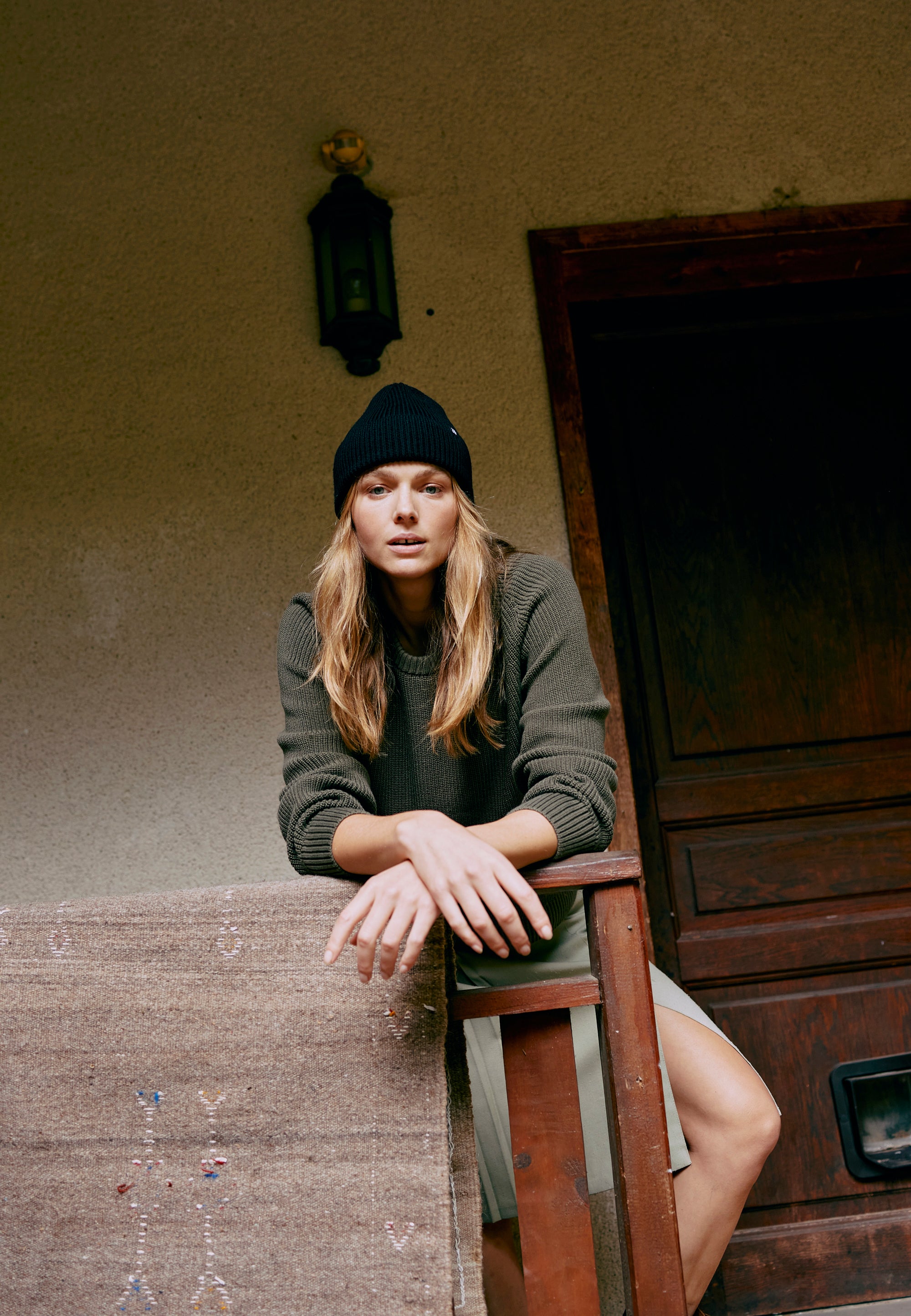
How to wear it
A few ideas if you're stuck


Composition
100% cotton
Origin and certifications
- Cotton: Turkey (heathered colour), India (solid colour)
- Spinning, knitting, making-up: Portugal
... make in Portugal and not in France? Of course, producing in Portugal lets us sell at lower prices. But it's also easier to achieve good quality there: in the 80s, when France moved its industry offshore, Portugal strengthened its own. That said, others do manage to make excellent sweaters that are 100% made in France, like Saint-James.
... does cotton come from so far away? Cotton grows best in tropical regions, which is why it always comes from a fair distance. While a few plucky French holdouts manage to grow it in their fields, cotton farming remains marginal in Europe.

How this product will age
How do we know? We ask our customers what they think of the product one year after they've bought it. And if the product is less than a year old, we give you our predictions based on some spontaneous feedback and on our experience with similar products.
This sweater will age beautifully: unlike a wool version, it won't shrink in the machine, pill, or wear through at the elbows.
That said, like all cotton garments, it may lose its shape over the years and the colours may fade with washing (this should be less noticeable on the pastel blue version)
The textured knit carries a risk of snagging: it's easy to repair, but if you'd rather avoid any risk of a pulled thread, go for a sweater with a smooth knit like this one.
Care instructions
Wash it inside out, ideally at 30°, and skip the tumble dryer.
Why?
- Turning your sweater inside out before washing prevents snags and limits fading.
- Washing at 30° is greener and damages the garment less than at 40°.
- Air-drying rather than tumble-drying keeps the elastane thread in the sleeves from slackening. Don't dry it on a hanger either: your damp sweater is heavy and could lose its shape under the weight of the water. The best thing for its lifespan and for the planet is to dry it flat, on a drying rack or a towel.
After a few washes, the sweater can become a bit rougher, mainly because of limescale that builds up in the fibres. A wash with fabric softener or white vinegar, a quick spin in the tumble dryer, or 5 minutes on your back, and it'll soften up again.
And if you really want this sweater to last for years, put on an apron before you make your raspberry jam.
Environmental cost
This environmental cost is calculated using the official methodology of the French environmental labelling scheme (in force since 1 October 2025).

The label above shows the product's environmental cost according to the official methodology of France's environmental labelling scheme. It's what its manufacture "costs" nature when you look at its impact on climate change, ocean acidification, its toxicity to freshwater, and so on. Currently rolled out in the textile sector, this label should soon appear on many everyday consumer products (food, cosmetics, furniture, etc.) to help you shop more responsibly.
The cotton sweater therefore has an environmental cost of 1219 impact points*.
By comparison, a garment of equivalent weight, 100% conventional cotton, made in Bangladesh and sold by a fast fashion brand, has an environmental cost of 4544 points*.
Why the difference? Here are the main reasons:
- The countries of production: manufacturing in Portugal or France requires less fossil fuel than in Bangladesh (one of the main producers of low-cost clothing). The result: this more local production limits the impact on climate change, ocean acidification and resource depletion.
- The material: organic cotton has a fairly low environmental impact compared with conventional cotton, notably because it uses few pesticides (so low toxicity for freshwater) and because it's biodegradable (so fewer issues with microfibres or end-of-life waste).
- Durability: fast fashion brands encourage buying by refreshing their collections very quickly and offering a huge number of styles, and they discourage repairs by charging ridiculously low prices. This increases the number of garments sold per person and reduces the number of times a garment is worn. At Loom, we've chosen the opposite: business practices that encourage our customers to keep their clothes as long as possible.
Even though we've done everything we can to keep it as low as possible, this product's environmental impact is not negligible. So before you buy, make your clothes last as long as possible.
*Calculations performed by Loom on 31 August 2026. Click the links to access the simulations from the official Ecobalyse tool and get more details on the assumptions used. Please note: the number of points is not always exactly the same on Ecobalyse (whose method evolves regularly) as on the official environmental display (based on version 7.0 of Ecobalyse)
Reviews for this product
The standard practice is to send review request e-mails a few days after the purchase. We wait a month, the minimum time needed to form a well-informed opinion
Customer review policy
When do you ask customers for reviews?
We send you a review request one month after you receive your order. We reckon that's the minimum amount of time needed to have worn and washed a garment several times and to really form a well-informed opinion. After that, all your reviews are published within the week, whether they're good or not.
Do you ask for reviews on 100% of the products customers order?
We used to do that at first, then we realised we were starting to send far too many emails to some people who buy from us regularly. In short, we were spamming a bit. On top of that, it was starting to take up way too much of the team's time to reply to reviews - since we want to reply individually and privately to almost every person who leaves us a review. Today, we no longer ask for reviews on products that meet the following two criteria: 1/ There are enough reviews shown on the site for people who want to buy to form a well-informed opinion about the product 2/ We've read enough reviews within the Loom team to understand how to improve the product for the next generation.
Hold your horses: what proves we don't tamper with reviews by slapping 5 stars everywhere?
Honestly: nothing, we're just giving you our word. Same as for everything else, by the way: where we manufacture, where our wool comes from, our lab test scores, and so on. The only times we might touch what you write are if your message contains spelling mistakes (and even then, quite a few slip past us) or if it's racist, homophobic, and so on (but that's never happened so far).
Asking for a review after a month isn't enough to know whether the clothes really are durable, is it?
You're right, which is why we send you another review request email a year after your purchase – we even ask for a photo to see how your garment has aged. The answers help us improve our clothes and provide information about "how this product will age" on our product pages. To avoid bothering our customers needlessly, we don't ask for these reviews on 100% of the products ordered: as soon as we have enough data to understand the areas for improvement, we stop asking for the one-year reviews.