




The sneakers
Released in May 2020
Released in October 2022
Different sole shape: switching from a raised tread to a recessed one, which is less prone to abrasion
Sole 30% more abrasion-resistant: wear drops from 150 mm3 to 100 mm3
Switch from a cemented construction (stiffer) to a Strobel construction to make the shoe more flexible and lighter
Factory change to ensure better build quality
Released in June 2024
Switched to a leather inner lining that slips less but is no longer vegetable-tanned.
Sturdier leather back patch
Switched to laces without aglets (too many issues with them coming off)
Switched to a stronger sewing thread to better secure the sole
The upper and the lining are made of full-grain leather, the strongest part of the hide (where the density of collagen fibres is highest).
By the way, is leather a bad thing? We tried to answer this huge question in this article.
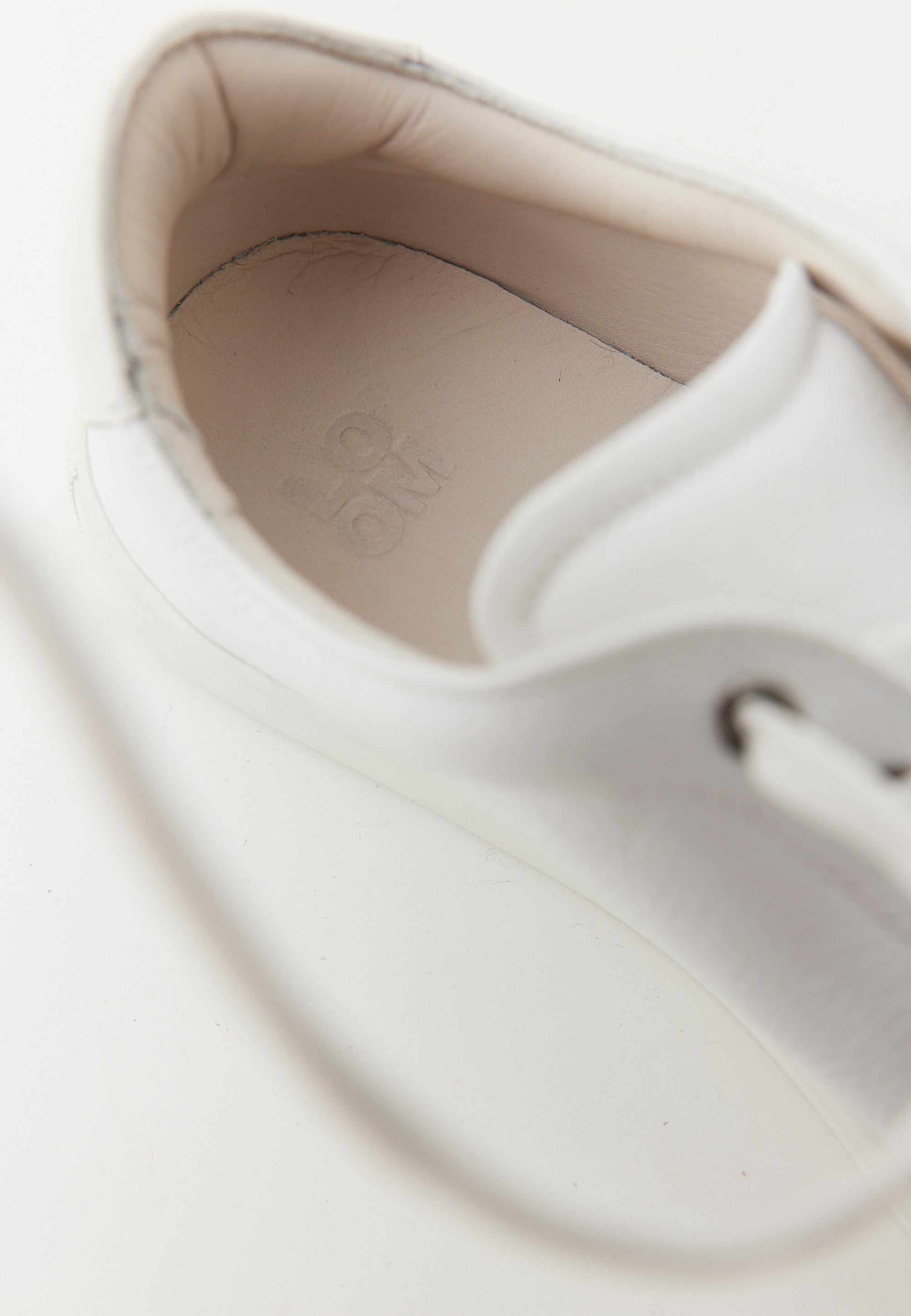
Thick padding around the ankle and a memory-foam insole (removable).
These shoes are made in the Portuguese factory Flaj, which we've been working with since 2022.
The techniques that ensure quality
 Sturdy sole
The main reason we throw out our sneakers is that the sole is too worn down. So we tested different soles in the lab and picked the toughest one.
Lab test result: relative volume loss of 98 mm3 vs. 182 mm3 and 199 mm3 for the other soles tested (and vs. 152 mm3 for the first generation of these sneakers).
 Sturdy sole
 Double stitching
 Sturdy laces
 Double stitching
To keep your soles from doing a runner, they're first glued and then stitched.
Sturdy sole
Double stitching
Sturdy laces
 Sturdy laces
No risk of them snapping off in your hand after a sharp tug: our laces are made of (recycled) polyester, far tougher than cotton ones. Even if recycled polyester is nowhere near a miracle fix
Sturdy sole
Double stitching
Sturdy laces
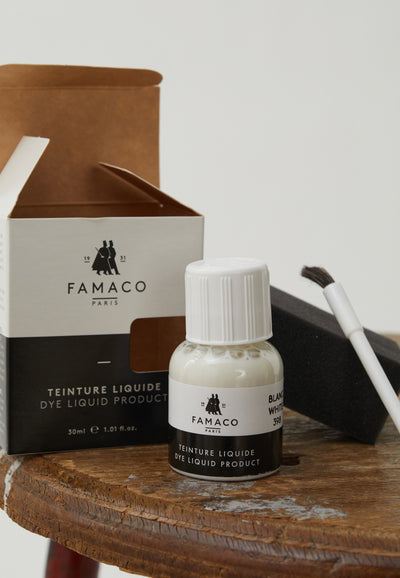
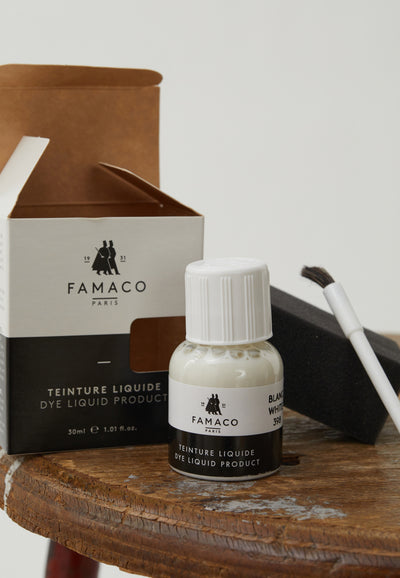
For our white sneakers


For our belts and shoes
Clean, sturdy and comfortable


We chose a beautiful grained leather and kept the number of seams to a minimum for a clean silhouette. To make these sneakers last as long as possible, we didn't cut corners on quality: full-grain leather, soles both stitched and glued, and highly durable rubber. And we didn't forget about comfort either: thick foam around the ankle, a memory-foam insole, a leather lining, and ventilation eyelets to keep odors away.
In detail

Grained leather
To give it more character (and because scuffs show less).

Ventilation eyelets
Guaranteed nickel-free, they let sweat out without letting rain in (which is what keeps your feet dry).

Fewer seams
The more panels there are, the less comfortable the sneaker becomes (in the little world of footwear, they say it reduces the "give"). Here, the outside is made from a single piece of leather: not only is it more comfortable, it's also more elegant.
How to wear it
A few ideas if you're stuck


Origin and certifications
- Hides: Europe
- Tanning: Spain (outer leather)
- Soles: Portugal
- Made in: Portugal
... make them in Portugal and not in France? Of course, producing in Portugal lets us sell at lower prices. But it's also easier to make good quality there: in the 80s, when France offshored its industry, Portugal was busy strengthening its own. That said, others do manage to make excellent sneakers that are 100% made in France, like Sessile.
How this product will age
How do we know? We ask our customers what they think of the product one year after they've bought it. And if the product is less than a year old, we give you our predictions based on some spontaneous feedback and on our experience with similar products.
These sneakers will age really well overall: if you take your shoes off properly (NOT by using your other foot), the sole won't come unglued, and if you look after them well, the leather will soften and mold to your foot. Someone who walked 600 km in these sneakers even wrote to us: "this thick leather has really softened now, it's like the seat of an old luxury car, it's gorgeous."
The three main signs of aging are as follows:
- On the white version, scuffs may appear faster than on some mainstream sneakers whose leather is coated in plastic (but which will crack more quickly along the creases and end up lasting less time). So you'll need to care for them regularly by following our care guide, and don't hesitate to use "white restorer" (which we sell here).
- The sole will yellow slightly. This is due to a change in the rubber's chemical structure over time: it happens to all synthetic rubbers and, unfortunately, there's not much anyone can do about it.
- The sole will wear down through abrasion. This shouldn't happen right away, but if the day comes when it needs replacing, you can take them to a specialist cobbler (a few ideas here).
Care instructions
Before you start, the tips of the laces sometimes leave a few marks on the white sole from prolonged contact in the shoebox. No worries: rub with the back of a sponge (with a bit of washing-up liquid if needed) and it'll come off.
And if you're wondering whether your sneakers are the right size, know that it's better for them to be slightly too big than slightly too small (they can't stretch to get bigger...). And if, for example, you notice a very slight lift at the heel, know that it'll ease off once the sneakers have broken in to your feet.
Now let's move on to the care tips: leather that isn't looked after will inevitably dry out, crack or lose its shape sooner or later. And then it's game over: there's no going back, even if the leather is top quality. On the other hand, if you put in a little time, you'll be able to keep your sneakers for years.
The fundamental thing to understand is that leather is made up of about 5% oils — they're what give it its suppleness, its durability and its water resistance. If they escape, the leather dries out. So your goal is simple: keep the leather oiled.
Here's how to do it:
-> You need to "feed" it regularly, at least once every 6 months. Ideally with a special beeswax-type product like this one, very rich in fat (avoid bathroom moisturisers, which contain too much water and could therefore end up doing the opposite — driving out the oils and cracking the leather).
-> If your sneakers get soaked, let them dry in the open air, then feed the leather. Yes, really: moisture drives out oils (something you'll know if you've ever made a vinaigrette — watery vinegar doesn't mix with oil).
-> Try not to wear them two days in a row, especially if you tend to sweat or if it's raining. That gives your sneakers time to release moisture.
If you bought the sneakers in white:
The second thing to understand is that white shows dirt, and you'll spot little marks and scuffs more easily than on a dark colour. In fact, on our full-grain leather, these scuffs may appear a bit faster than on some white sneakers whose leather is coated in plastic (like those from a certain famous three-stripe brand) but which crack faster at the creases and end up lasting less long. To clean white leather, there are plenty of tutorials on YouTube, but to make sure we give you advice that actually works, we tested (almost) all of them for you: here's at this link the before/after result on some Loom sneaker prototypes.
And here's the method we recommend:
1/ First, take out the laces: you'll toss them in your next wash. If they look really dirty, you can first let them soak for a few minutes in water with whatever whitening agent you have on hand (e.g. hydrogen peroxide / bleach / sodium percarbonate).
2/ Next, remove the stains and dirt from the leather and the sole. To do this, mix a little soap (black soap ideally) into lukewarm water, then scrub it all over your sneakers with an old toothbrush (just be careful not to get your sneaker too wet, see our tips above).
3/ If there are stubborn marks around the edges of the soles or on the leather, scrub them with a... magic sponge (the ones sold in the DIY aisle, with an abrasive foam). Wet it a little and it works like a charm.
4/ To finish, all that's left is to hide the little scuffs and bring back the white of the leather. Once your sneakers are dry, grab a cloth and apply a "white restorer" for sneakers (they contain the same kinds of white pigments used to dye the leather of your sneakers, and honestly it's essential to buy one — good news, we sell one at Loom here). Let it dry for 30 minutes, and apply a second coat if needed.
And finally, to whiten your soles again (they'll inevitably end up yellowing), you can apply hydrogen peroxide to the sole with a brush (or a toothbrush), cover it with cling film and leave the sneakers in full sunlight for a few hours. That'll whiten them right up :-) Even more effective: swap the hydrogen peroxide for a whitening restorer from the Tarrago brand! More info in this article.
Reviews for this product
The standard practice is to send review request e-mails a few days after the purchase. We wait a month, the minimum time needed to form a well-informed opinion
Politique d'avis client
Quand demandez-vous des avis aux clients ?
On vous envoie une demande d’avis un mois après la réception de votre commande. On estime que c’est le minimum de temps nécessaire pour avoir porté et lavé un vêtement plusieurs fois et se faire vraiment un avis éclairé. Ensuite, tous vos avis sont publiés dans la semaine, qu’ils soient bons ou non.
Est-ce que vous demandez des avis sur 100% des produits commandés par les clients ?
On le faisait au début, puis on s’est rendus compte qu’on commençait à envoyer beaucoup trop d’emails à certaines personnes qui achètent régulièrement chez nous. Bref, on spammait un peu. En plus, ça commençait à nous prendre vraiment beaucoup trop de temps dans l’équipe de répondre aux avis - puisqu'on veut répondre individuellement en privé à presque chaque personne qui nous laisse un avis. Aujourd’hui, on ne demande plus d’avis sur les produits qui répondent aux deux critères suivants : 1/ Il y a suffisamment d’avis affichés sur le site pour que les personnes qui souhaitent acheter puissent se faire une opinion éclairée sur le produit 2/ Nous avons lu dans l’équipe Loom suffisamment d’avis pour comprendre comment faire évoluer le produit à la prochaine génération.
Minute papillon : qu’est-ce qui prouve qu’on ne modifie pas les avis en mettant des 5 étoiles partout ?
Honnêtement : rien, on vous donne juste notre parole. Comme pour le reste d’ailleurs : où on fabrique, d’où vient notre laine, la note de nos tests labos, etc. Les seules fois où on pourrait toucher à ce que vous écrivez, c’est si votre message contient des fautes d’orthographe (et encore y en a pas mal qui nous échappent) ou s’il est à caractère raciste, homophobe, etc (mais ça n’est jamais arrivé pour l’instant).
Demander un avis au bout d’un mois, ce n’est pas assez pour savoir si les vêtements sont vraiment durables, non ?
Vous avez raison, c’est pour ça qu'on vous envoie un autre e-mail de demande d'avis un an après votre achat – on demande même une photo pour voir comment votre vêtement a vieilli. Les réponses nous servent à améliorer nos vêtements et à donner des informations sur "comment ce produit va vieillir" dans nos pages produits. Pour ne pas solliciter inutilement nos clients et nos clientes, on ne demande pas ces avis sur 100% des produits commandés : dès que nous avons suffisamment de données pour comprendre les points d’amélioration, nous arrêtons demander les avis à un an.