


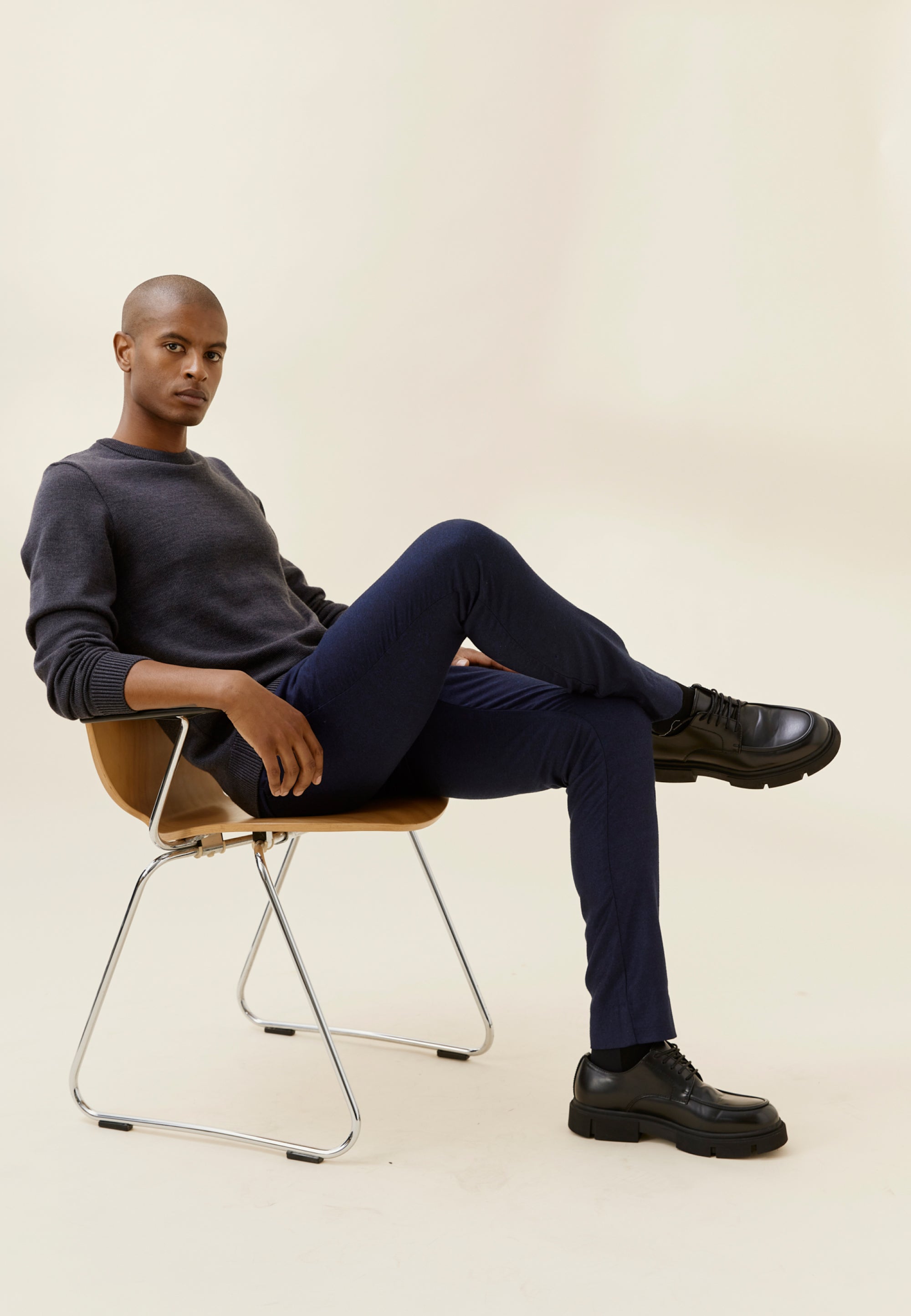
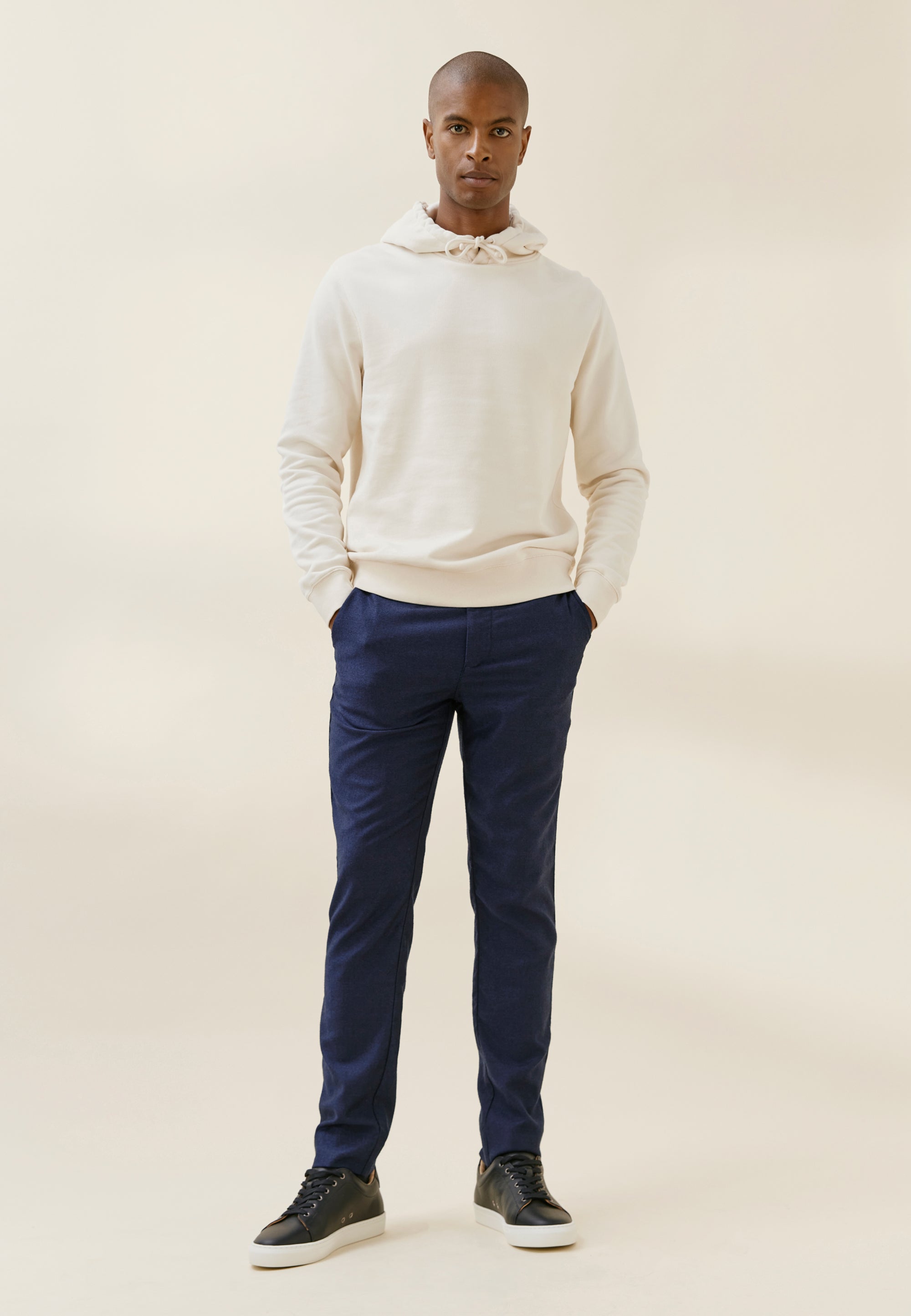
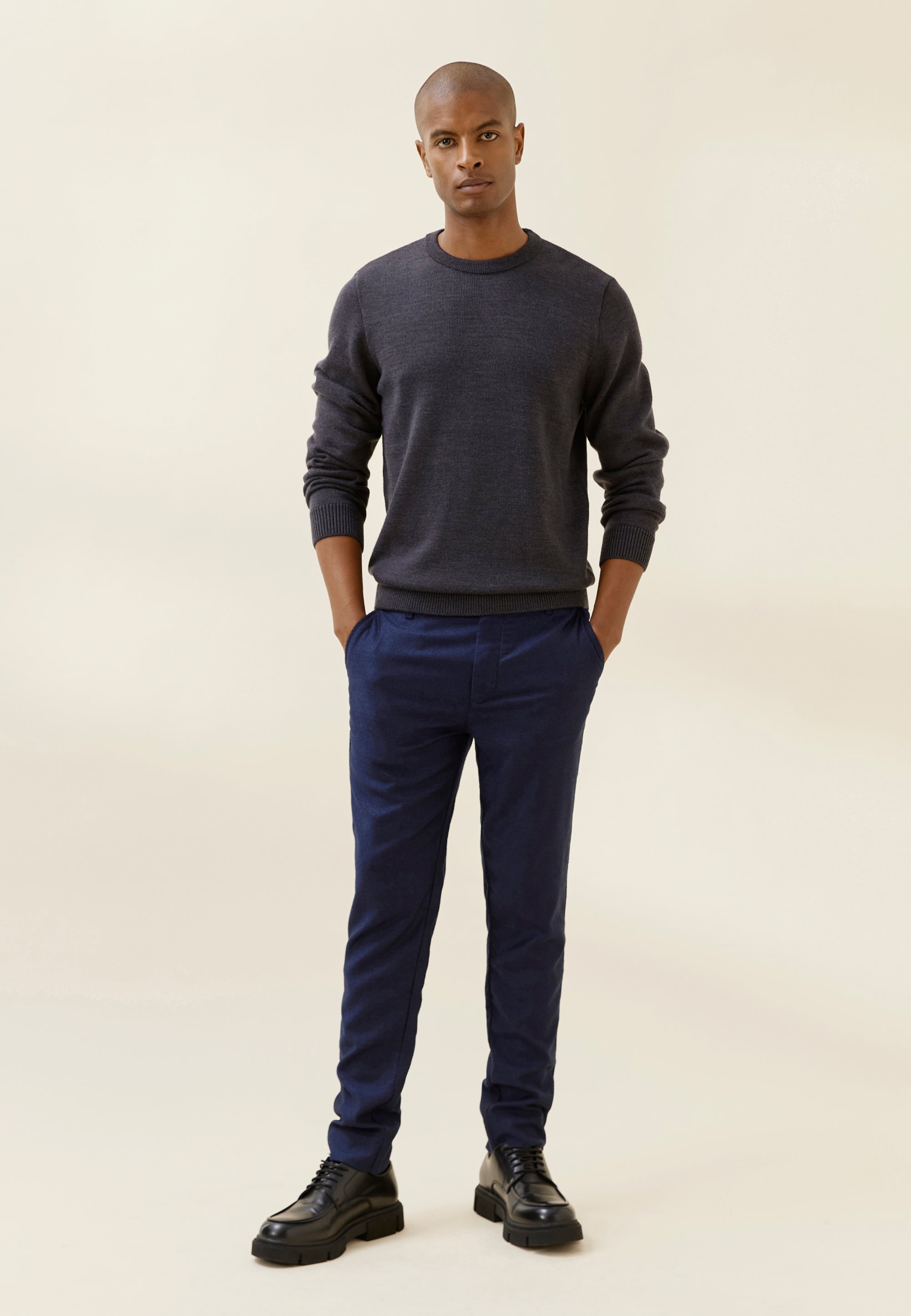


The flannel trousers (previous generation)
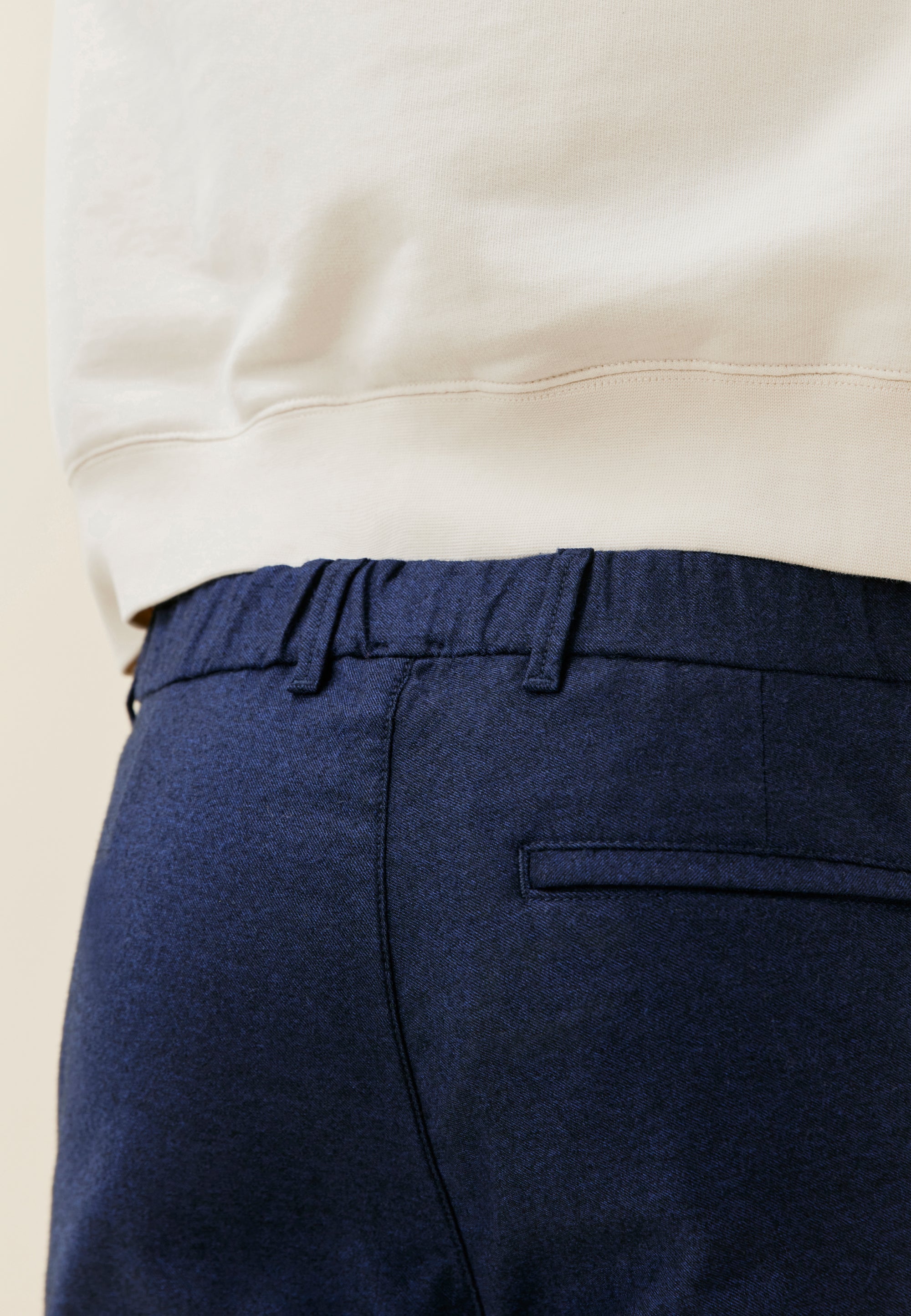
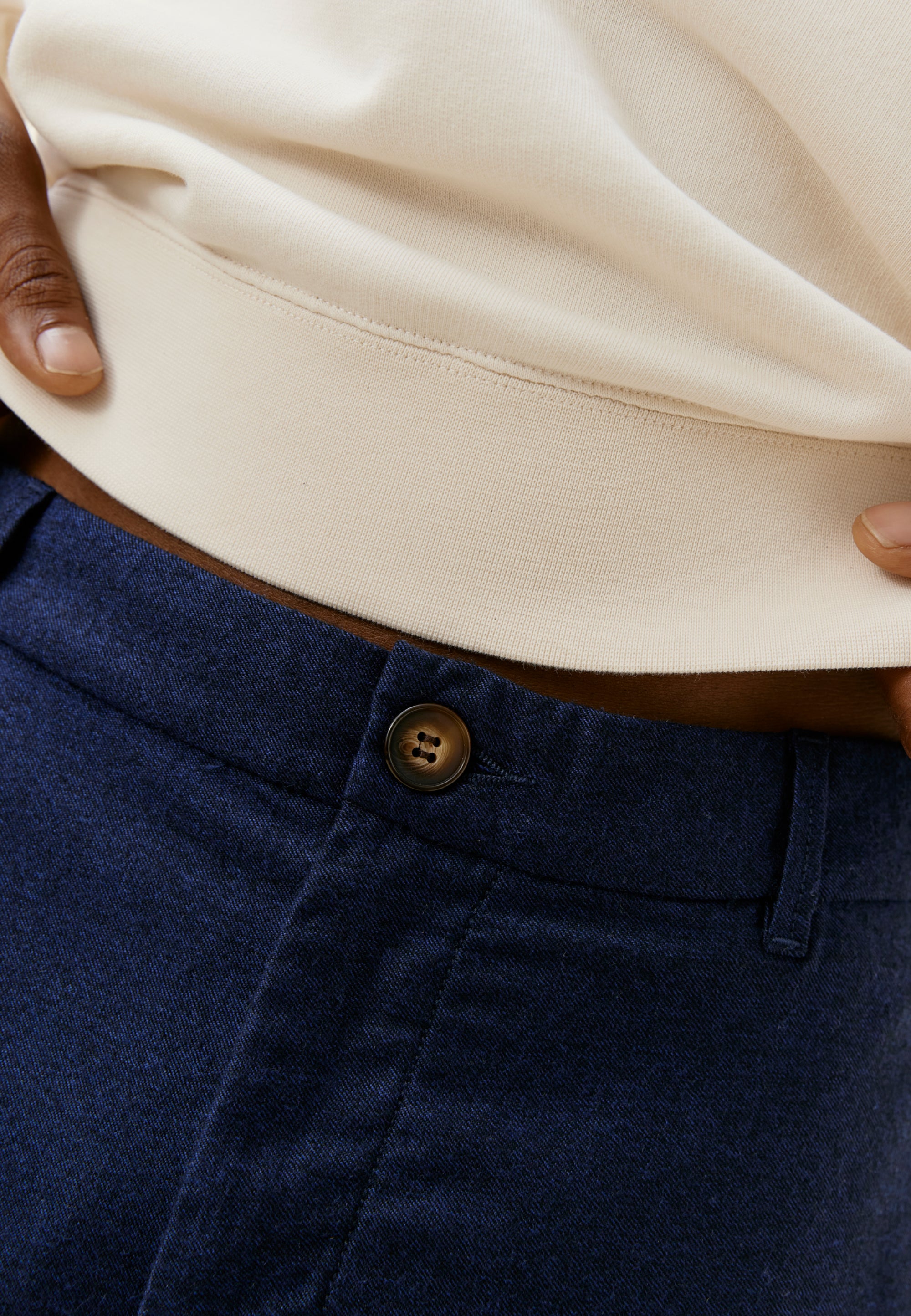
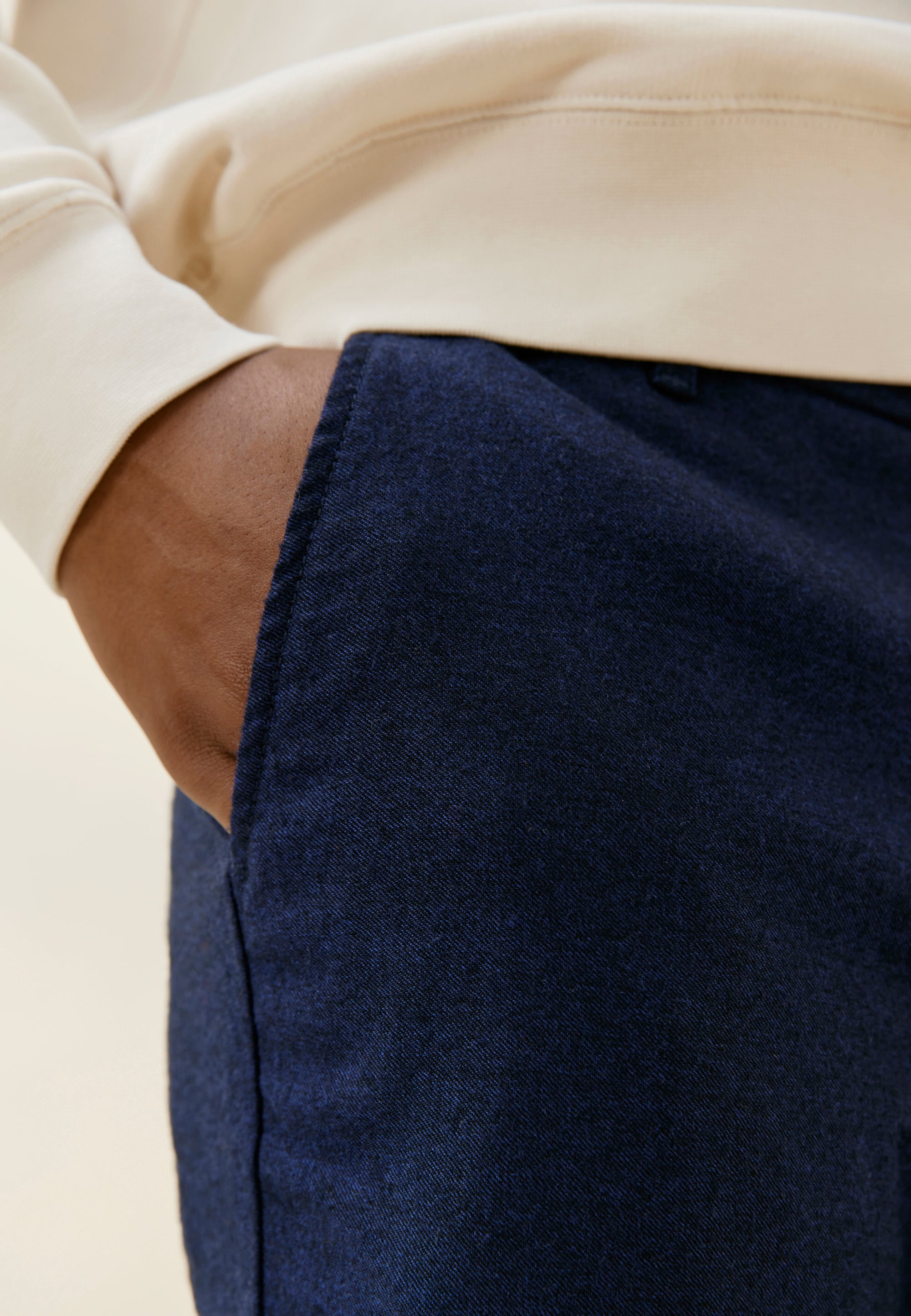
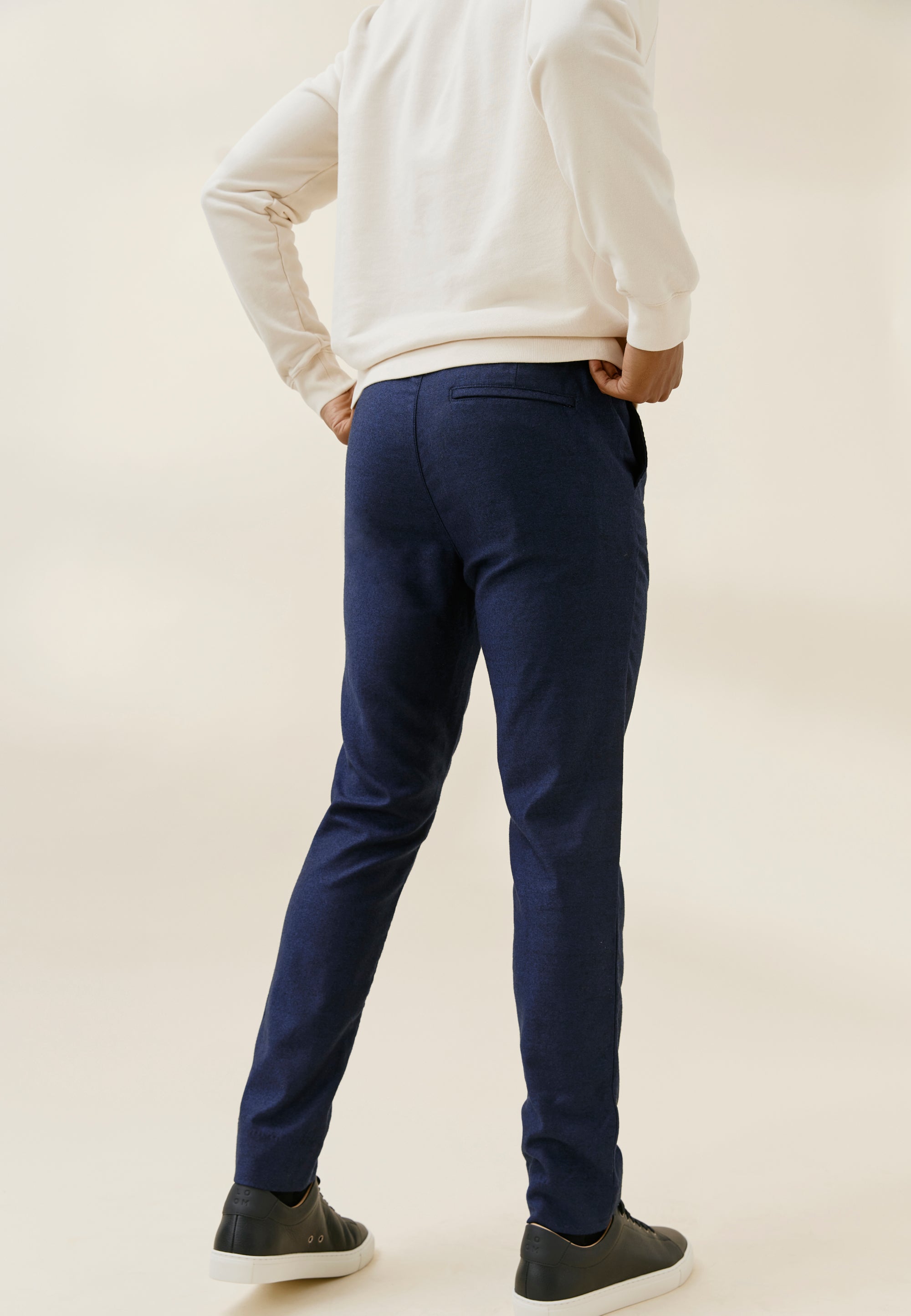
€145 for a pair of trousers might seem expensive. But it's hard to do it for less: wool flannels are very expensive fabrics, especially since we chose a combed, machine-washable wool. On top of that, these trousers require lengthy, careful making (elasticated waistband at the back, button + hook closure, zipped back pocket, and so on) done in Portugal (it's more expensive than in Eastern Europe, Turkey or North Africa, but it guarantees better working conditions).
Released on
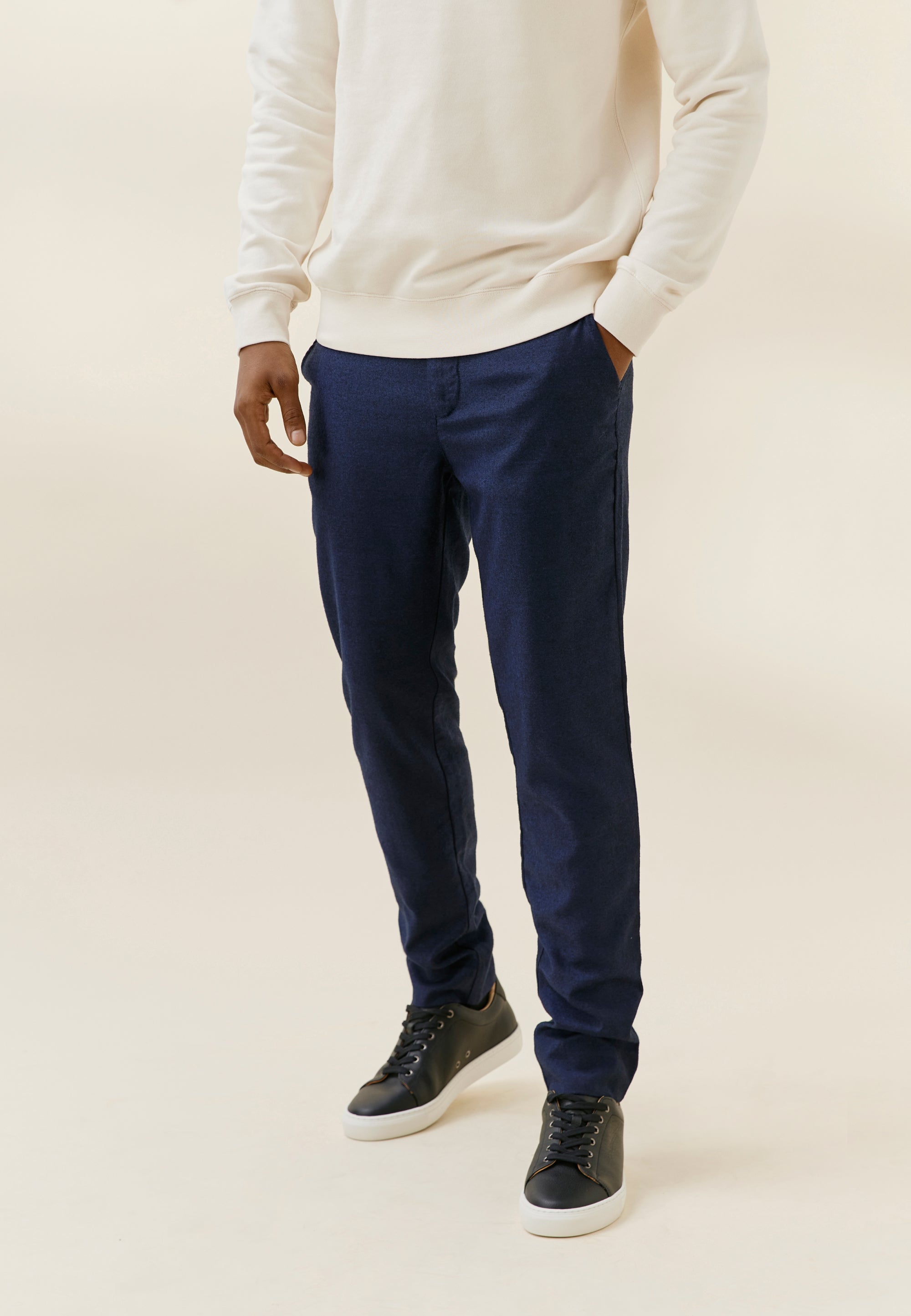
The difference with the previous generation (which sold for €135) is that on this one, the fabric is a little thinner and the cut a little more fitted.
Wool flannel is a favourite of luxury brands. And for good reason: these fabrics are super soft and naturally breathable, the drape is flawless, and the colours are rich and deep. These trousers are also comfortable thanks to the elastic waistband at the back and the natural stretch of the wool (who said you have to suffer to look good?). Wear them with dress shoes for days when you need to look sharp, or with sneakers for a more casual look.
Composition
100% wool
Origin and certifications
- Wool: Research in progress
- Spinning, dyeing, weaving: Italy
- Manufacturing: Portugal
... made in Portugal and not in France? Of course, producing in Portugal lets us sell at lower prices. But it's also easier to achieve good quality there: in the 80s, when France offshored its industry, Portugal built its own up. That said, others do manage to make excellent wool trousers made in France, like Belleville.
... not French sheep's wool? Sadly, the wool-processing industry has almost entirely disappeared in France, largely due to competition from countries in the southern hemisphere... Today it's very hard for us to find French yarn on the market at the price and quality we're after, but a few brands like Laines Paysannes and Ardelaine manage to make some really beautiful pieces in French wool.
How this product will age
How do we know? We ask our customers what they think of the product one year after they've bought it. And if the product is less than a year old, we give you our predictions based on some spontaneous feedback and on our experience with similar products.
These trousers should age very well and avoid two syndromes of worn-out trousers: no fading (wool holds colours very well) and no sagging (wool naturally springs back into shape after being stretched).
The only downside of wool is that it's less abrasion-resistant than cotton: it's not the trousers to wear every day if you cycle to work or often crawl over gravel (even though we chose a so-called "combed" wool, where the shorter fibres have been removed, giving it twice the abrasion resistance of standard wools – resistant to 18,000 cycles vs. 10,000 cycles in our lab tests).
That said (and it's not intuitive), because the fabric is very soft, it's less likely to wear through at the crotch than your thick, rough jeans – more on the why and how here.
Care instructions
If you find them too long, you can turn up a hem, and if you find them too short, you can let down the hem we've folded up inside.
The advantage of wool is that its natural elasticity keeps it from going baggy over time. If you do find that the trousers have loosened up a bit over time, just hold a steam iron close and they'll go back to their original shape.
The downside of wool is that it's less abrasion-resistant than cotton: that means this isn't the pair of trousers to wear every day if you cycle to work or often crawl around on gravel. But good news, holes can be fixed: if you spot holes appearing, whisk them off to your local tailor straight away — since the colour is heathered, the repair will be very discreet.
Airing this pair of trousers out overnight will get rid of just about every odour. And if you really want to, you can machine wash them (wool or delicate cycle, no need to push your luck). No tumble drying, but ironing is recommended, inside out and not too hot to avoid marks.
Reviews for this product
The standard practice is to send review request e-mails a few days after the purchase. We wait a month, the minimum time needed to form a well-informed opinion
Customer review policy
When do you ask customers for reviews?
We send you a review request one month after you receive your order. We reckon that's the minimum amount of time needed to have worn and washed a garment several times and to really form a well-informed opinion. After that, all your reviews are published within the week, whether they're good or not.
Do you ask for reviews on 100% of the products customers order?
We used to do that at first, then we realised we were starting to send far too many emails to some people who buy from us regularly. In short, we were spamming a bit. On top of that, it was starting to take up way too much of the team's time to reply to reviews - since we want to reply individually and privately to almost every person who leaves us a review. Today, we no longer ask for reviews on products that meet the following two criteria: 1/ There are enough reviews shown on the site for people who want to buy to form a well-informed opinion about the product 2/ We've read enough reviews within the Loom team to understand how to improve the product for the next generation.
Hold your horses: what proves we don't tamper with reviews by slapping 5 stars everywhere?
Honestly: nothing, we're just giving you our word. Same as for everything else, by the way: where we manufacture, where our wool comes from, our lab test scores, and so on. The only times we might touch what you write are if your message contains spelling mistakes (and even then, quite a few slip past us) or if it's racist, homophobic, and so on (but that's never happened so far).
Asking for a review after a month isn't enough to know whether the clothes really are durable, is it?
You're right, which is why we send you another review request email a year after your purchase – we even ask for a photo to see how your garment has aged. The answers help us improve our clothes and provide information about "how this product will age" on our product pages. To avoid bothering our customers needlessly, we don't ask for these reviews on 100% of the products ordered: as soon as we have enough data to understand the areas for improvement, we stop asking for the one-year reviews.