




The sneakers
Released in May 2020
Released in October 2022
Different sole pattern: switching from a raised tread to a recessed one, less prone to abrasion
Sole 30% more resistant to abrasion: wear drops from 150 mm3 to 100 mm3
Switch from a cemented construction (more rigid) to a Strobel construction to make the shoe more flexible and lighter
Change of factory to ensure better build quality
Released in June 2024
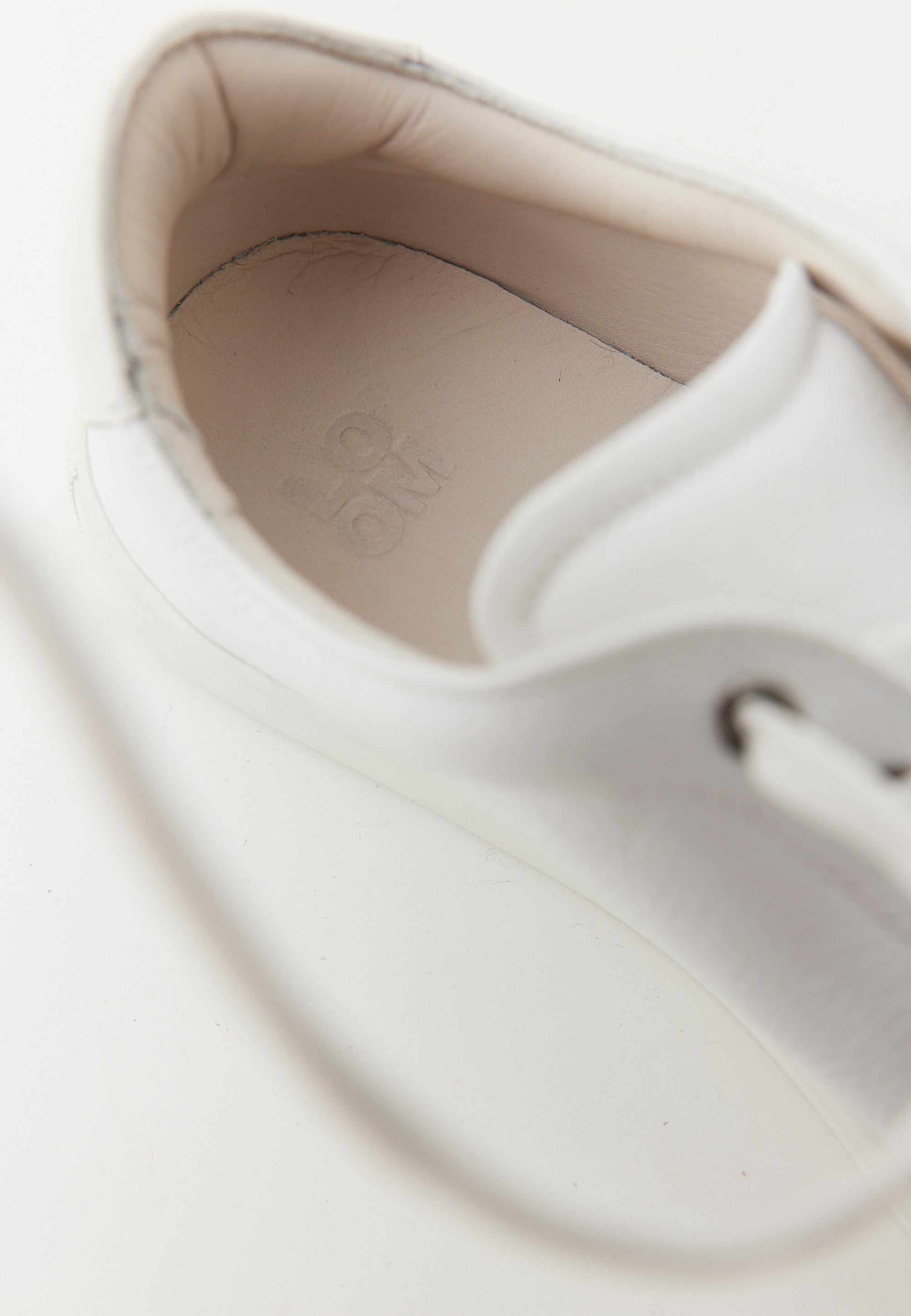
Switch to a leather inner lining that slides less but is no longer vegetable-tanned.
More durable leather back patch
Switch to laces without aglets (as they too often came unstuck)
Switch to a stronger sewing thread to better secure the sole
The upper and the lining are made of full-grain leather, the strongest part of the hide (where the density of collagen fibres is highest).
By the way, is leather a bad thing? We tried to answer this huge question in this article.
Thick padding around the ankle and a memory-foam insole (removable).
These shoes are made in the Portuguese factory Flaj, which we've been working with since 2022.
The techniques behind the quality
 Sturdy sole
The main reason we throw out our sneakers is that the sole is too worn. So we tested different soles in the lab and chose the sturdiest one.
Lab test result: relative volume loss of 98 mm3 vs. 182 mm3 and 199 mm3 for the other soles tested (and vs. 152 mm3 for the first generation of these sneakers).
 Sturdy sole
 Double fastening
 Sturdy laces
 Double fastening
To keep your soles from making a run for it, they're glued and then stitched.
Sturdy sole
Double fastening
Sturdy laces
 Sturdy laces
No risk of them coming off in your hand after a sharp tug: our laces are made of (recycled) polyester, far more durable than cotton laces. Even if recycled polyester is far from being a cure-all
Sturdy sole
Double fastening
Sturdy laces
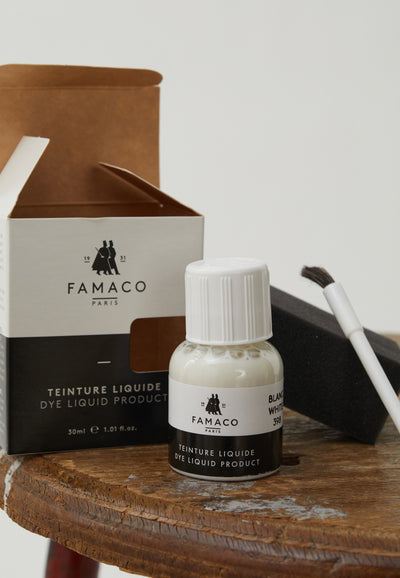
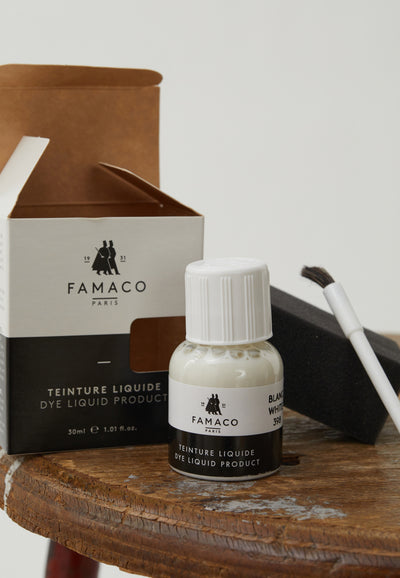
For our white sneakers


For our belts and shoes
Clean, sturdy and comfortable


We chose a beautiful grained leather and kept the number of seams to a minimum for a clean silhouette. To make these sneakers last as long as possible, we didn't cut corners on quality: full-grain leather, soles both stitched and glued, and highly durable rubber. And we didn't forget about comfort either: thick foam around the ankle, a memory-foam insole, a leather lining, and ventilation eyelets to keep odors away.
In detail

Grained leather
To give it more character (and because scuffs are less visible).

Ventilation eyelets
Guaranteed nickel-free, they let sweat escape without letting the rain in (that's what keeps your feet dry).

Reduced seams
The more panels there are, the more uncomfortable the sneaker becomes (in the little world of shoemaking, they say it reduces the "give"). Here, the exterior is made from a single piece of leather: not only is it more comfortable, it's also more elegant.
How to wear it
A few ideas if you're stuck


Origin and certifications
- Hides: Europe
- Tanning: Spain (outer leather)
- Soles: Portugal
- Manufacturing: Portugal
... manufacture in Portugal and not in France? Of course, producing in Portugal lets us sell at lower prices. But it's also easier to achieve good quality there: in the 80s, when France offshored its industry, Portugal strengthened its own. That said, others manage to make excellent sneakers that are 100% made in France, like Sessile.
How this product will age
How do we know? We ask our customers what they think of the product one year after they've bought it. And if the product is less than a year old, we give you our predictions based on some spontaneous feedback and on our experience with similar products.
These sneakers will generally age very well: if you take your shoes off properly (NOT by using your other foot), the sole won't come unstuck, and if you look after them well, the leather will soften and mould to your foot. Someone who walked 600km in these sneakers even wrote to us: "this thick leather has now softened nicely, it's like the seat of an old luxury car, it's beautiful".
The three main signs of ageing are as follows:
- On the white version, scuffs may appear faster than on some mainstream sneakers whose leather is coated in plastic (but which will crack faster along the creases and ultimately last a shorter time). So you'll need to care for them regularly by following our care guide, and don't hesitate to use "white restorer" (which we sell here).
- The sole will yellow slightly. This is due to a change in the chemical structure of the rubber over time: it happens with all synthetic rubbers and unfortunately there's not much that can be done about it.
- The sole will wear down through abrasion. This shouldn't happen any time soon, but if one day it needs replacing, you can go to a specialist cobbler (a few ideas here).
Care instructions
Before you start, sometimes the tips of the laces leave a few marks on the white sole from being in contact for a long time inside the shoebox. Don't worry: rub with the back of a sponge (with a bit of washing-up liquid if needed) and it'll come off.
And if you're wondering whether your sneakers are the right size, know that it's better for them to be slightly too big than slightly too small (they can't stretch to fit...). And if, for example, you notice a very slight lifting at the heel, know that it will ease off once the sneakers have moulded to your feet.
Now let's move on to the care tips: leather that isn't looked after will sooner or later dry out, crack or lose its shape. And then it's game over: there's no going back, even if the leather is excellent quality. On the other hand, if you spend a little time on it, you'll be able to keep your sneakers for years.
The key thing to understand is that leather is made up of around 5% oils – they're what give it its suppleness, its strength and its water resistance. If they escape, the leather dries out. So your goal is simple: keep the leather oiled.
Here's how to do it:
-> You need to "feed" it regularly, at least once every 6 months. Ideally with a special product like beeswax like this one, very rich in oils (avoid bathroom moisturisers, which contain too much water and could therefore end up doing the opposite: driving out the oils and cracking the leather).
-> If your sneakers get wet, let them dry in the open air and then feed the leather. Yes, really: moisture drives out oils (something you'll know if you've ever made a vinaigrette: watery vinegar won't mix with oil).
-> Try not to wear them two days in a row, especially if you tend to sweat or if the weather is rainy. That gives your sneakers time to release the moisture.
If you bought the sneakers in white:
The second thing to understand is that white shows dirt, and you'll spot little marks and scuffs more easily than on a dark colour. In fact, on our full-grain leather, these scuffs may appear a little faster than on some white sneakers whose leather is coated in plastic (like those from a famous three-stripe brand) but which crack more quickly at the creases and ultimately last less long. To clean white leather, there are plenty of tutorials on YouTube, but to be sure we're giving you advice that actually works, we've (almost) tested them all for you: here at this link is the before/after result on Loom sneaker prototypes.
And here's the method we recommend:
1/ First, take out the laces: pop them in your next wash. If they look really dirty, you can first soak them for a few minutes in water with a whitening agent you have to hand (e.g. hydrogen peroxide / bleach / sodium percarbonate).
2/ Next, remove the marks and dirt from the leather and the sole. To do this, mix a little soap (ideally black soap) into some lukewarm water, then scrub it all over your sneakers with an old toothbrush (just be careful not to get your sneakers too wet, see our tips above).
3/ If there are stubborn marks around the edges of the soles or on the leather, scrub them with a... magic sponge (the ones sold in the DIY aisle, with an abrasive foam). Wet it a little and it works wonders.
4/ Finally, all that's left is to hide the little scuffs and revive the white of the leather. After drying your sneakers, take a cloth and apply a "white renovator" for sneakers (they contain the same types of white pigments that were used to dye the leather of your sneakers, and honestly it's essential to buy one — good news, we sell one at Loom here). Leave it to dry for 30 minutes, and apply a second coat if necessary.
And finally, to whiten your soles again (which will inevitably end up yellowing), you can apply hydrogen peroxide to the sole with a brush (or a toothbrush), cover it with cling film and leave the sneakers in full sun for a few hours. It'll make them white again :-) Even more effective: swap the hydrogen peroxide for a renovator from the Tarrago brand! More information in this article.
Reviews for this product
The standard practice is to send review request e-mails a few days after the purchase. We wait a month, the minimum time needed to form a well-informed opinion
Customer review policy
When do you ask customers for reviews?
We send you a review request one month after you receive your order. We reckon that's the minimum amount of time needed to have worn and washed a garment several times and to really form a well-informed opinion. After that, all your reviews are published within the week, whether they're good or not.
Do you ask for reviews on 100% of the products customers order?
We used to do that at first, then we realised we were starting to send far too many emails to some people who buy from us regularly. In short, we were spamming a bit. On top of that, it was starting to take up way too much of the team's time to reply to reviews - since we want to reply individually and privately to almost every person who leaves us a review. Today, we no longer ask for reviews on products that meet the following two criteria: 1/ There are enough reviews shown on the site for people who want to buy to form a well-informed opinion about the product 2/ We've read enough reviews within the Loom team to understand how to improve the product for the next generation.
Hold your horses: what proves we don't tamper with reviews by slapping 5 stars everywhere?
Honestly: nothing, we're just giving you our word. Same as for everything else, by the way: where we manufacture, where our wool comes from, our lab test scores, and so on. The only times we might touch what you write are if your message contains spelling mistakes (and even then, quite a few slip past us) or if it's racist, homophobic, and so on (but that's never happened so far).
Asking for a review after a month isn't enough to know whether the clothes really are durable, is it?
You're right, which is why we send you another review request email a year after your purchase – we even ask for a photo to see how your garment has aged. The answers help us improve our clothes and provide information about "how this product will age" on our product pages. To avoid bothering our customers needlessly, we don't ask for these reviews on 100% of the products ordered: as soon as we have enough data to understand the areas for improvement, we stop asking for the one-year reviews.