


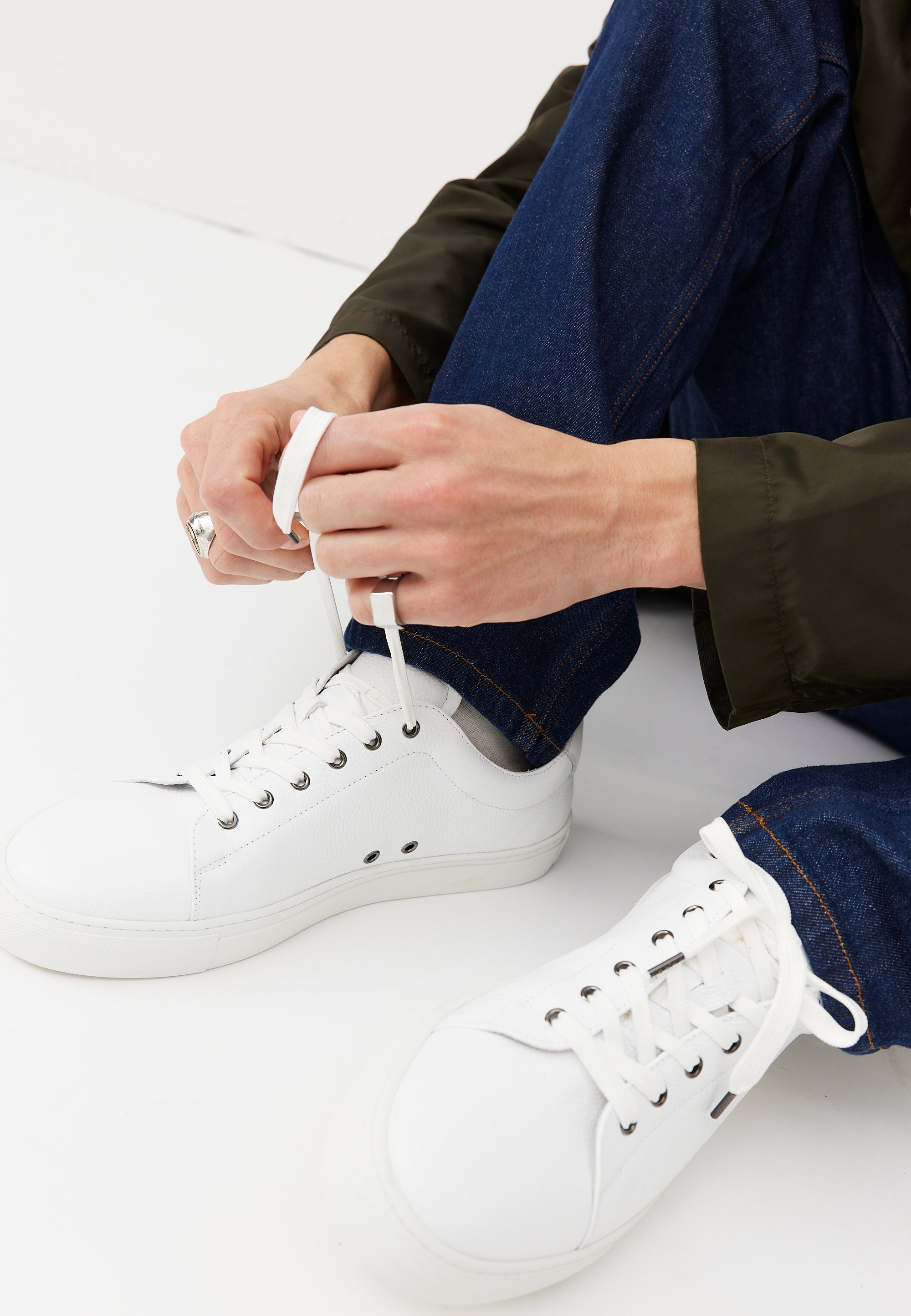
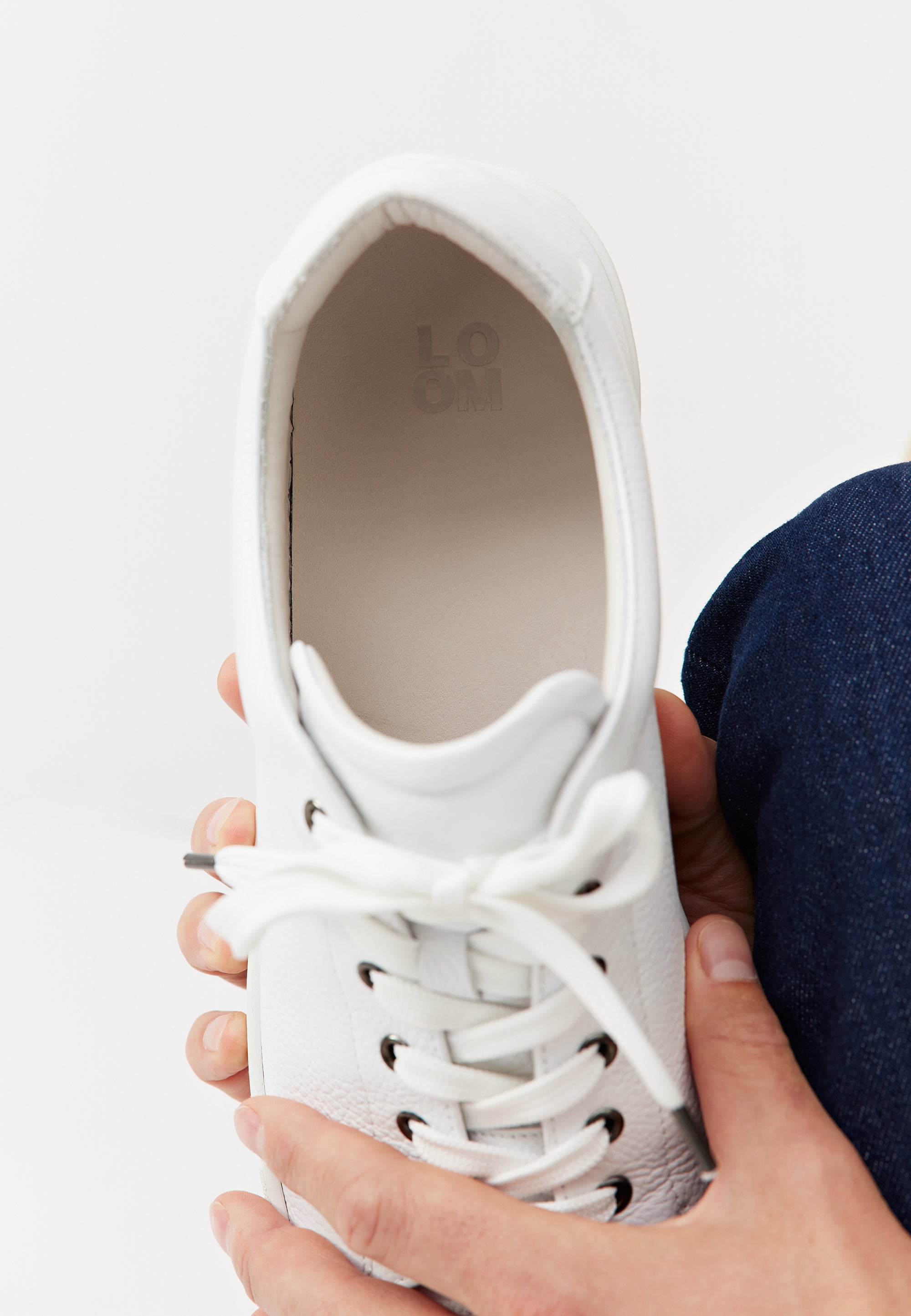
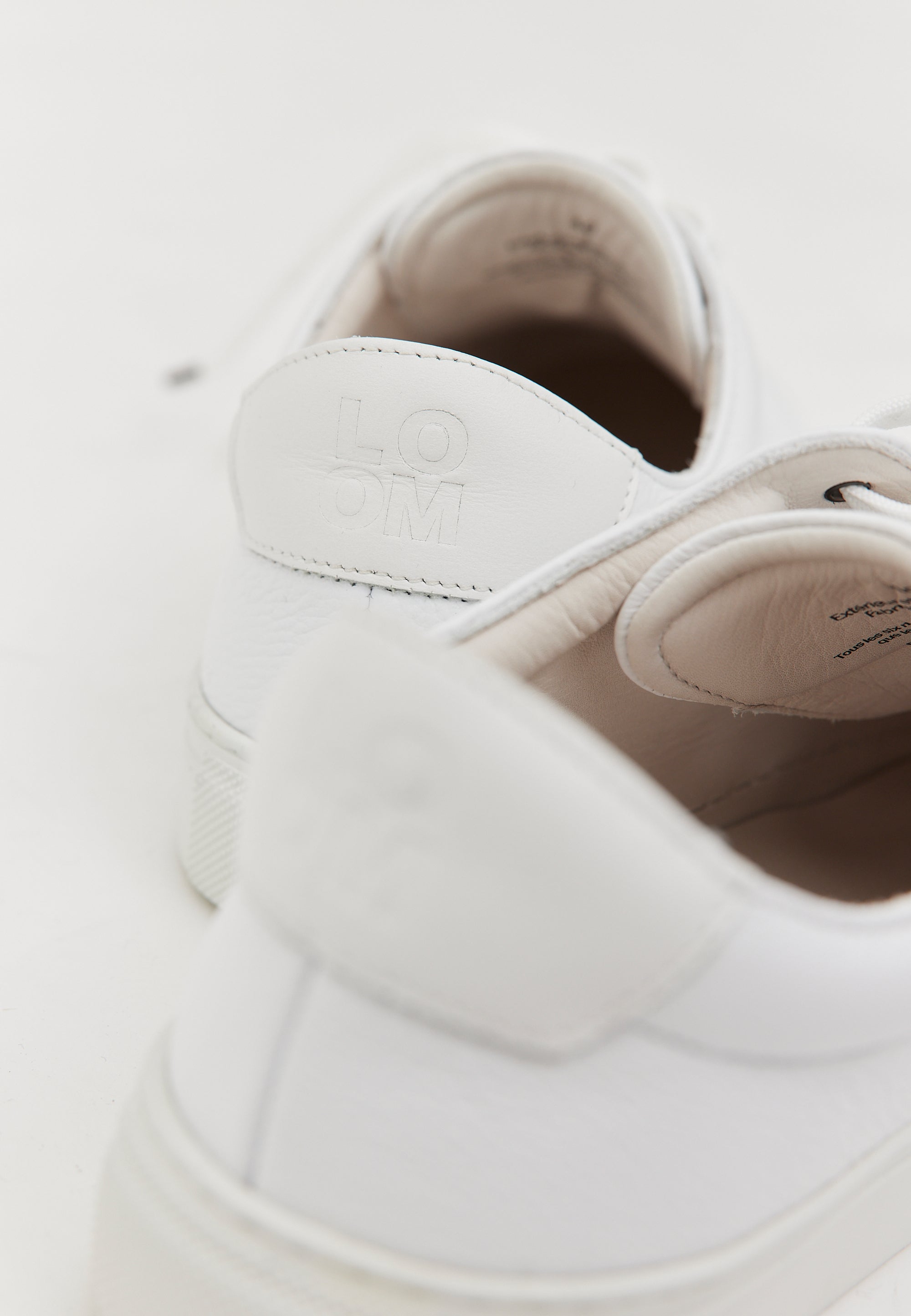


The sneakers
Released in May 2020
Coming out in October 2022
Different sole pattern: the pattern changes from a serrated design to a recessed design, which is less prone to abrasion
Sole is 30% more resistant to abrasion:
Switch from a cemented construction (stiffer) to a Strobel construction to make the shoe more flexible and lighter
Change of manufacturing facility to ensure higher build quality
Coming in June 2024
Switch to a leather inner lining that is less slippery but is no longer vegetable-tanned.
More durable leather patch on the back
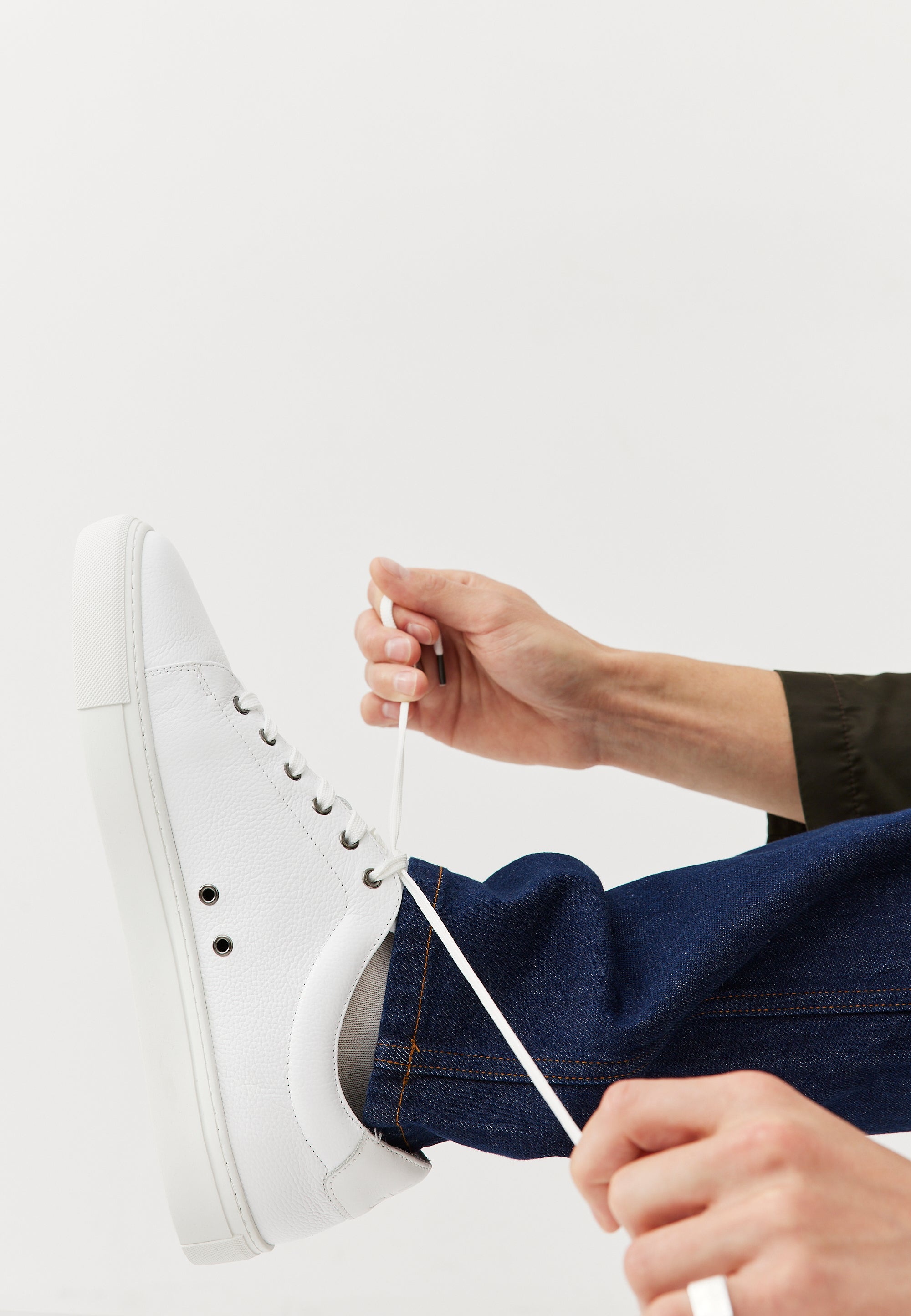
Switch to laces without aglets (due to too many problems with them coming loose)
Switch to a stronger sewing thread to better secure the sole
The upper and lining are made of full-grain leather, the strongest part of the hide (where the density of collagen fibers is highest).
By the way, is leather a bad thing? We tried to answer that big question in this article.
Thick foam padding around the ankle and a memory foam insole (removable).
These shoes are manufactured at the Flaj factory in Portugal, with which we have been working since 2022.
Techniques That Ensure Quality
 Sturdy sole
The main reason we throw away our sneakers is because the soles are too worn out. So we tested different soles in the lab and chose the most durable model.
Laboratory test results: Relative volume loss of 98 mm³ compared to 182 mm³ and 199 mm³ for the other insoles tested (and compared to 152 mm³ for the first generation of these sneakers).
 Sturdy sole
 Double mounting
 Sturdy shoelaces
 Double mounting
To keep your insoles from coming loose, they are first glued and then sewn.
Sturdy sole
Double mounting
Sturdy shoelaces
 Sturdy shoelaces
There’s no risk of them coming undone after a sharp tug: our shoelaces are made of (recycled) polyester, which is much stronger than cotton laces. Even though recycled polyester is far from being a panacea
Sturdy sole
Double mounting
Sturdy shoelaces
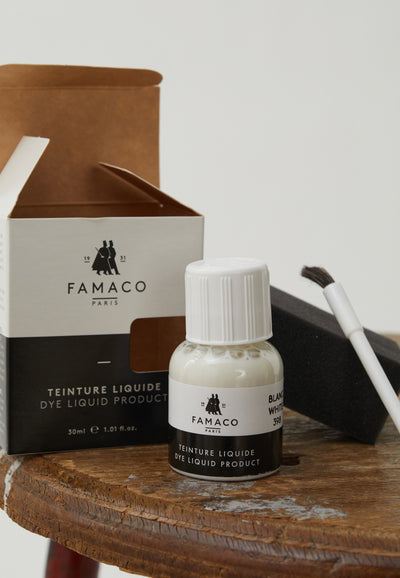
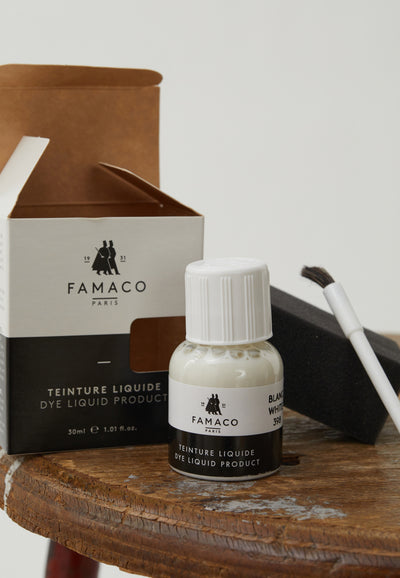
For our white sneakers


Shoe Polish
7€
For our belts and shoes
Sleek, sturdy, and comfortable


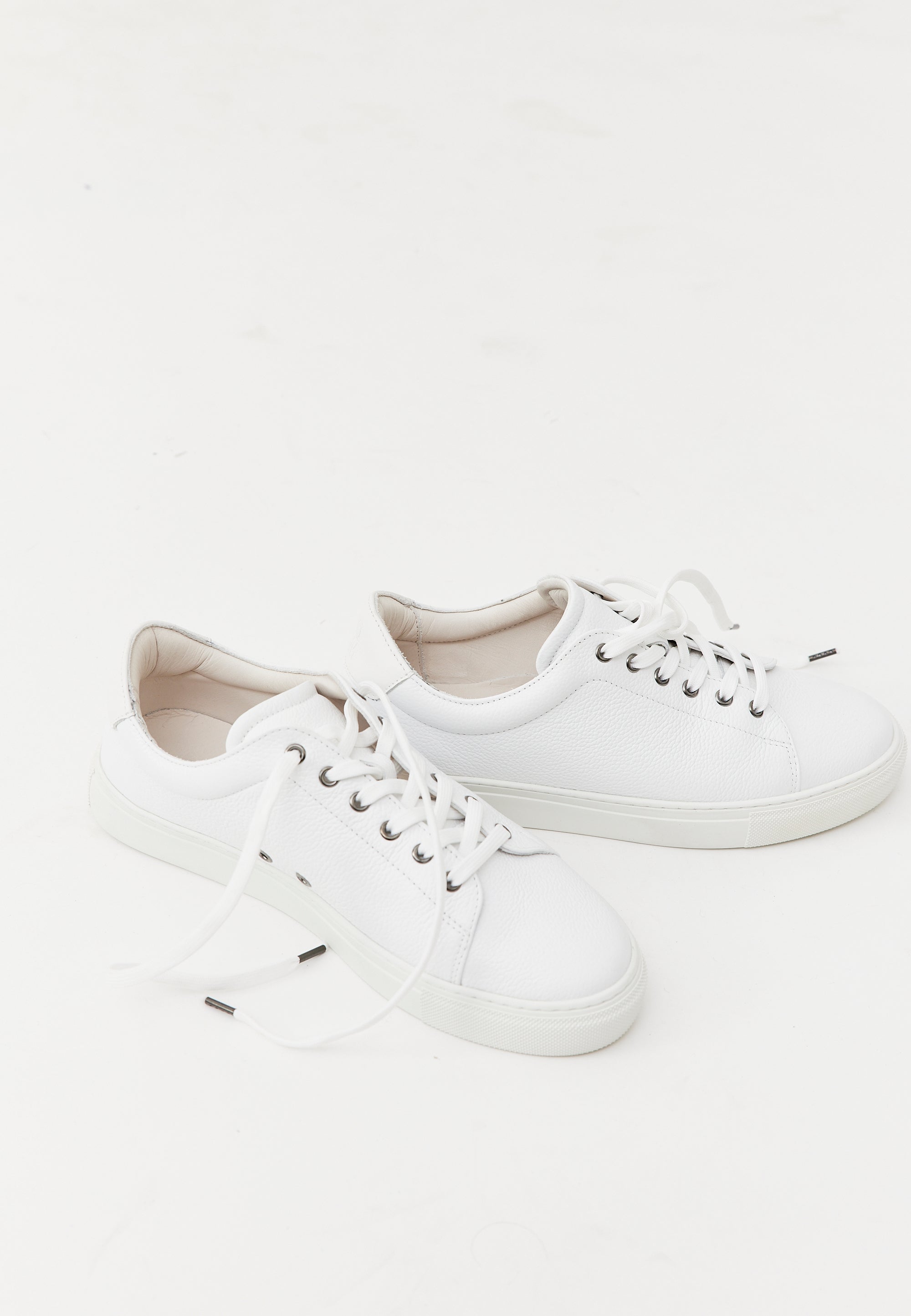
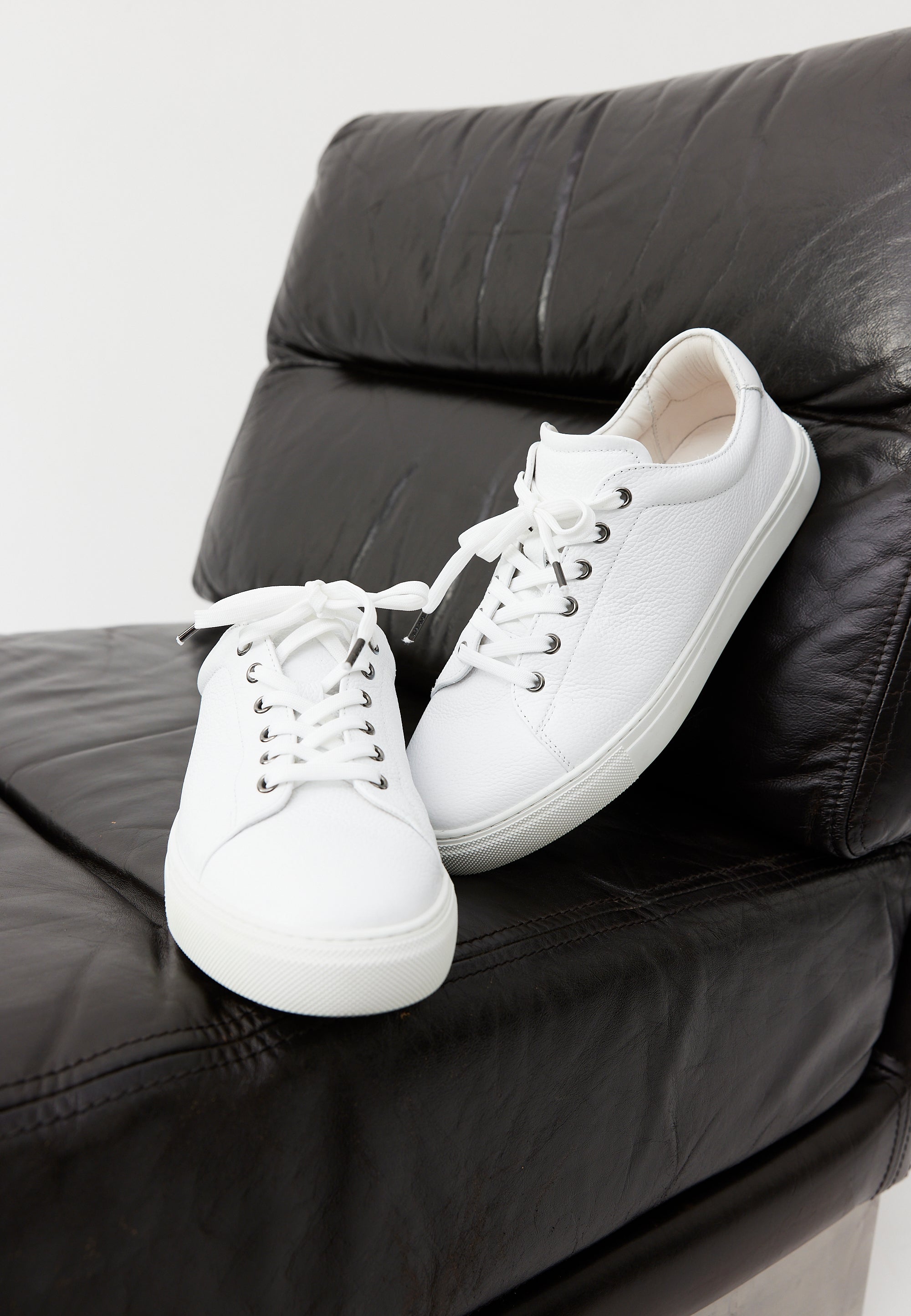
We chose beautiful grained leather and kept the number of seams to a minimum for a clean, streamlined look. To ensure these sneakers last as long as possible, we didn’t skimp on quality: full-grain leather, stitched and glued soles, and highly durable rubber. Finally, we didn’t forget about comfort: thick foam padding around the ankle, a memory foam insole, a leather lining, and ventilation eyelets to prevent odors.
In detail

Grained leather
To give it more character (and because the scratches are less noticeable).

Ventilation eyelets
Guaranteed nickel-free, they wick away sweat without letting rain in (which is what keeps your feet dry).

Fewer seams
The more seams there are, the more uncomfortable the sneaker becomes (in the world of footwear, they say this reduces the “fit”). Here, the upper is made from a single piece of leather: not only is it more comfortable, but it’s also more elegant.
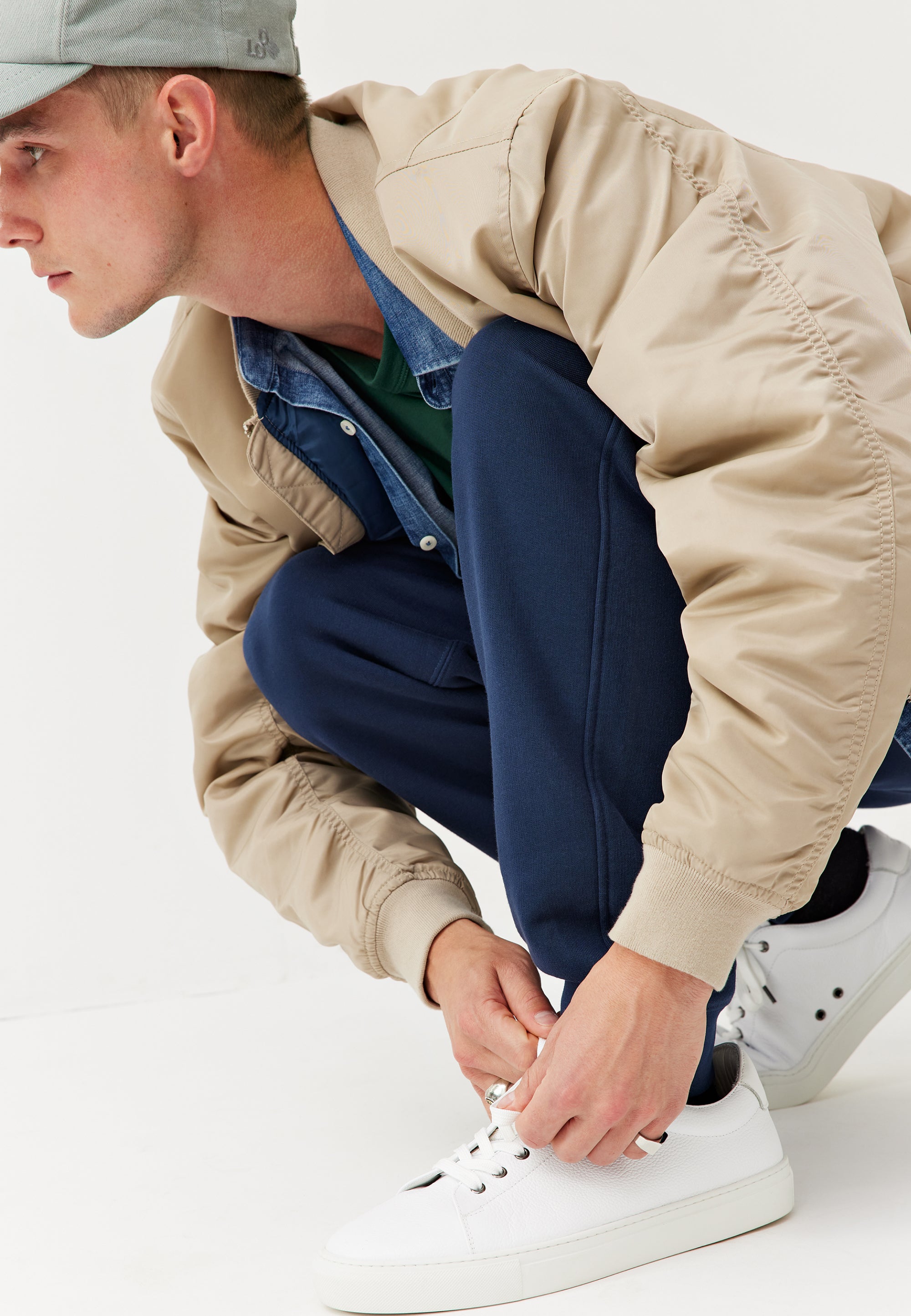
How to Wear Them
A few ideas if you're stuck


Origin and Certifications
- Hides: Europe
- Tanning: Spain (outer leather)
- Insoles: Portugal
- Manufactured in Portugal
...manufacture in Portugal instead of France? Of course, manufacturing in Portugal allows us to sell at lower prices. But it’s also easier to produce high-quality products there: in the 1980s, when France outsourced its manufacturing, Portugal strengthened its own manufacturing sector. That said, other companies besides ours manage to make excellent sneakers that are 100% made in France, like Sessile.
How This Product Will Age
How do we know this? We ask our customers for their feedback on the product one year after purchase. And if the product is less than a year old, we provide our predictions based on some unsolicited feedback and our experience with similar products.
These sneakers will generally age very well: if you take them off properly (NOT by using your other foot), the sole won’t come loose, and if you take good care of them, the leather will soften and mold to your foot. Someone who walked 600 km in these sneakers even wrote to us: “This thick leather has really softened up now—it feels like the seat of an old luxury car; it’s magnificent.”
The three main signs of aging are as follows:
- On the white version, scuffs may appear more quickly than on some mass-market sneakers made of plastic-coated leather (which, however, will crack more quickly at the creases and ultimately last less time). You should therefore care for them regularly by following our care guide, and don’t hesitate to use “white renovator” (which we sell here).
- The sole will yellow slightly. This is due to a change in the rubber's chemical structure over time: it happens with all synthetic rubbers, and unfortunately, there's not much that can be done about it.
- The sole will wear out over time due to abrasion. This shouldn't happen right away, but if you ever need to replace it, you can visit a specialized cobbler ( here are a few suggestions).
Care Instructions
Before you begin, the tips of the shoelaces may have left some marks on the white sole due to prolonged contact inside the shoe box. Don’t worry: rub the area with the back of a sponge (using dish soap if needed) and the marks will come off.
And if you’re wondering whether your sneakers are the right size, keep in mind that it’s better for them to be slightly too big than slightly too small (they won’t stretch any further...). And if, for example, you notice the heel is slightly loose, know that this will improve once the sneakers have broken in to your feet.
Now let’s move on to care tips: leather that isn’t properly cared for will inevitably dry out, crack, or lose its shape sooner or later. And once that happens, it’s ruined: there’s no going back, even if the leather is of excellent quality. On the other hand, if you spend a little time caring for them, you’ll be able to keep your sneakers for years.
The key thing to understand is that leather is composed of about 5% fat—this is what gives it its suppleness, durability, and water resistance. If these fats are lost, the leather dries out. So your goal is simple: keep the leather well-oiled.
Here’s how to do it:
-> You need to “nourish” it regularly, at least once every 6 months. Ideally, use a specialized product like beeswax, such as this one, which is very high in fat content (avoid bathroom moisturizers, which contain too much water and could actually end up stripping away the natural oils and causing the leather to crack).
-> If your sneakers get wet, let them air dry, then condition the leather. That’s right: moisture drives out oils (something you’ll know if you’ve ever made a salad dressing—watery vinegar doesn’t mix with oil).
-> Avoid wearing them two days in a row, especially if you tend to sweat or if the weather is rainy. This will give your sneakers time to let the moisture escape.
If you bought the sneakers in white:
The second thing to understand is that white shows dirt easily, and small stains and scuffs will be more noticeable than on a dark color. In fact, on our full-grain leather, these scuffs may appear a little faster than on some white sneakers made of laminated leather (like those from a famous brand with three stripes), but those will crack faster at the creases and ultimately last less time. There are plenty of tutorials on YouTube for cleaning white leather, but to make sure we’re giving you advice that actually works, we’ve tested (almost) all of them for you:follow this link tosee the before-and-after results on Loom sneaker prototypes.
Here are the instructions we recommend:
1/ First, remove the laces: you’ll wash them with your next load of laundry. If they look really dirty, you can soak them for a few minutes in water with a bleaching agent you have on hand (e.g., hydrogen peroxide, chlorine bleach, sodium percarbonate).
2/ Next, remove stains and dirt from the leather and the sole. To do this, mix a little soap (ideally black soap) into lukewarm water, then scrub it all over your sneakers with an old toothbrush (be careful not to get your sneakers too wet, though—see our tips above).
3/ If there are stubborn stains along the edges of the soles or on the leather, scrub them with a “magic” sponge (the kind sold in the home improvement aisle, with an abrasive foam). Wet it slightly, and it works like a charm.
4/ Finally, all that’s left is to hide the small scuffs and restore the leather’s white color. After your sneakers have dried, take a cloth and apply a “white restorer” for sneakers (these contain the same types of white pigments used to dye the leather on your sneakers, and honestly, it’s essential to buy one—and luckily, we sell themhere at Loom). Let it dry for 30 minutes, and reapply a second time if necessary.
And finally, to whiten your soles again (which will inevitably end up yellowing), you can apply hydrogen peroxide to the sole with a paintbrush (or a toothbrush), cover it with plastic wrap, and leave the sneakers in direct sunlight for a few hours. This will make them white again :-) Even more effective: replace the hydrogen peroxide with a Tarrago shoe restorer! More information in this article.
Reviews of this product
The standard practice is to send review request emails a few days after the purchase. We wait a month—the minimum amount of time needed to form an informed opinion.
Customer Review Policy
When do you ask customers for reviews?
We’ll send you a review request one month after we receive your order. We believe this is the minimum amount of time needed to have worn and washed an item several times and to form a truly informed opinion. After that, all your reviews are published within a week, whether they’re positive or negative.
Do you request reviews for 100% of the products ordered by customers?
We used to do that at first, but then we realized we were starting to send way too many emails to certain customers who shop with us regularly. In short, we were spamming them a bit. Plus, it was starting to take the team way too much time to respond to reviews—since we want to reply individually and privately to almost everyone who leaves us a review. Today, we no longer ask for reviews on products that meet the following two criteria: 1/ There are enough reviews posted on the site for potential buyers to form an informed opinion about the product. 2/ We on the Loom team have read enough reviews to understand how to evolve the product into the next generation.
Just a quick thought: What proof is there that we aren't manipulating reviews by giving 5-star ratings to everything?
Honestly: nothing—we’re just giving you our word. Just like with everything else, actually: where we manufacture our products, where our wool comes from, our lab test results, and so on. The only times we might edit what you write is if your message contains spelling mistakes (and even then, quite a few slip past us) or if it’s racist, homophobic, etc. (but that’s never happened so far).
Asking for feedback after just one month isn't enough to know if the clothes are really durable, is it?
You're right—that's why we send you another email asking for a review one year after your purchase—we even ask for a photo to see how your garment has aged. We use the responses to improve our clothing and to provide information on “how this product will age” on our product pages. To avoid unnecessarily bothering our customers, we don’t ask for reviews on 100% of the products ordered: as soon as we have enough data to understand where we can improve, we stop asking for reviews after one year.